
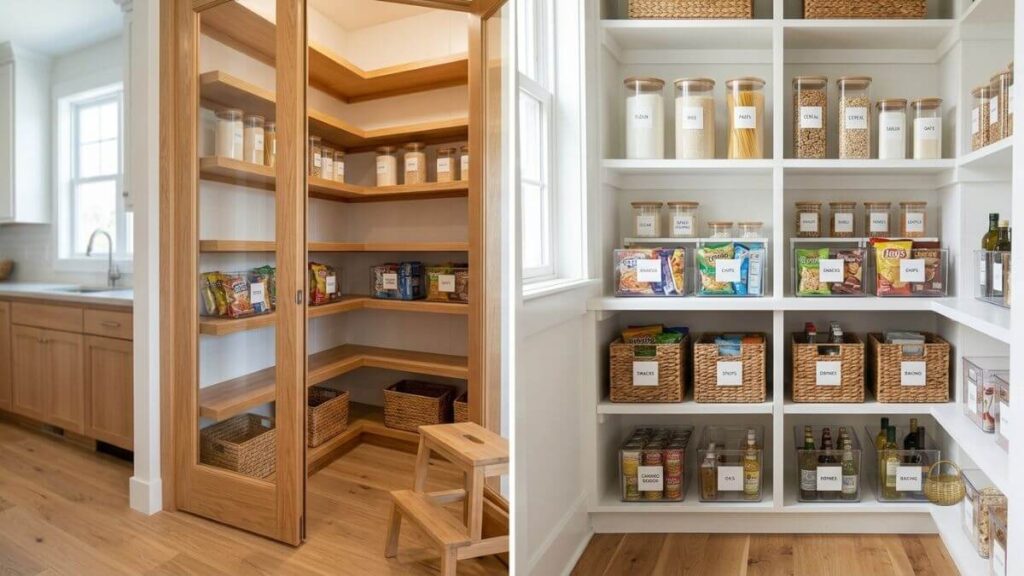
Have you ever opened your pantry looking for one simple ingredient, only to spend several minutes digging through half-empty bags, stacked cans, and forgotten snack boxes? Or maybe you’ve bought another bag of rice or pasta, only to realize later that there was already one hiding at the back of the shelf.
If that sounds familiar, you’re not alone. I’ll be honest, I used to think I needed a bigger pantry to keep everything organized. But after making a few simple changes, I realized the problem wasn’t the size of my pantry; it was the lack of a system.
Once every item had its own place, cooking became easier, grocery shopping became quicker, and I stopped wasting money on things I already had.
A messy pantry isn’t just frustrating. It wastes time, leads to expired food, and hurts your budget. The good news is that you don’t need a huge walk-in pantry or expensive storage systems to stay organized. With a few smart, practical changes, even the smallest kitchen pantry can become neat, functional, and easy to maintain.
In this guide, you’ll discover 15 practical pantry organization ideas that actually work. You’ll also find budget-friendly storage tips, clever solutions for small spaces, common mistakes to avoid, and even a bonus section with pantry organization tips specifically for Pakistani and South Asian kitchens.
By the end of this guide, you’ll have a simple, stress-free system that makes cooking easier, grocery shopping smarter, and your pantry a space you’ll actually enjoy opening!
⭐ What is the best way to organize a pantry?
The best way to organize a pantry is to remove expired items, group similar foods together, use clear airtight containers, label everything, and store frequently used items at eye level. Creating dedicated zones for snacks, baking supplies, grains, and canned goods makes your pantry easier to use and helps reduce food waste.
🌿 Her Kitchen Guide Notes
💚 My Kitchen Tip
I used to think I needed a bigger pantry, but I soon realized I just needed a better system. Organizing one shelf at a time made the whole process feel much easier and less overwhelming.
🛒 Shopping Tip
Before buying any storage containers, measure your pantry shelves first. Choosing the right size will save money, avoid returns, and help you make the most of your storage space.
Table of Contents
Why Pantry Organization Matters More Than You Think
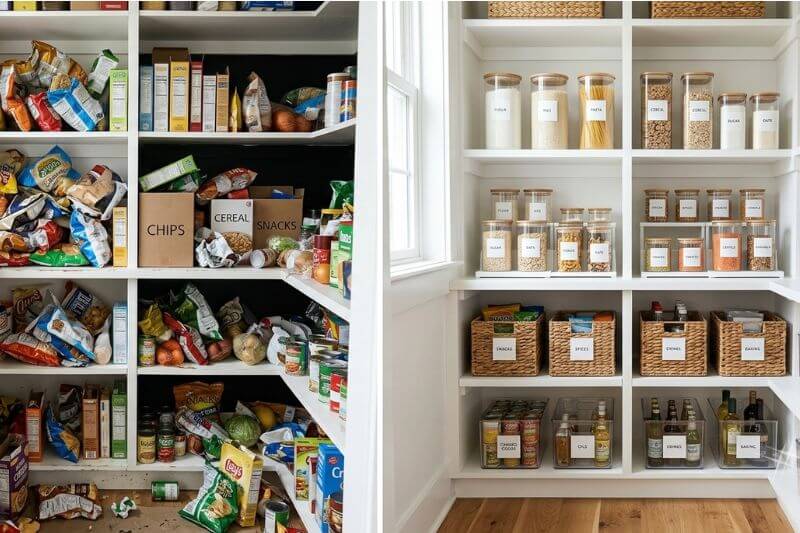
One thing I noticed was how much time I wasted looking for everyday ingredients. Sometimes the rice was behind the cereal boxes, and the spices were scattered across different shelves. It didn’t seem like a big problem until I realized it was happening almost every day.
If you find ingredients quickly, it prevents food from getting lost or expiring, saves money by reducing duplicate purchases, and makes meal preparation much less stressful.
Many people think they need more storage containers. In reality, most pantry problems happen because there isn’t a clear system for where everything belongs.
Once every item has its own place, keeping your pantry tidy becomes much easier.
Benefits of an Organized Pantry
- ✔ Saves time while cooking
- ✔ Reduces food waste
- ✔ Prevents duplicate grocery purchases
- ✔ Maximizes every inch of storage space
- ✔ Makes weekly meal planning easier
- ✔ Creates a cleaner and less stressful kitchen
💚 Her Kitchen Guide Tip
A well-organized pantry doesn’t have to be perfect. It just needs to make your daily cooking routine easier.
Why Your Pantry Keeps Getting Messy And How Pantry Organization Ideas Help
If your pantry never seems to stay organized, you’re definitely not the only one. After looking at common questions people ask online and real discussions from home cooks, the same problems keep coming up.
Here are the biggest reasons pantries become cluttered:
1. There Is No Organization System
Food is put back wherever there’s space, rather than returning to the same place each time.
2. Similar Items Are Scattered Everywhere
Pasta is on one shelf, sauce is somewhere else, and snacks end up in three different places. Finding what you need becomes frustrating.
3. Deep Shelves Hide Food
Items at the back are easy to forget. Many people discover expired products months later simply because they couldn’t see them.
4. Too Much Original Packaging
Boxes and bags come in different shapes and sizes, making shelves look crowded and wasting valuable space.
5. Buying Organizers Before Planning
This is one of the biggest mistakes people make. Buying beautiful containers without measuring shelves often leads to wasted money and containers that don’t fit properly.
Before You Start, Do These 5 Things First
Before buying a single basket or storage container, spend a little time preparing your pantry. This small effort will make every organisational idea work much better.
Trust me, measuring your shelves first can save you both money and frustration. It’s tempting to buy beautiful storage containers right away, but there’s nothing more disappointing than bringing them home only to realize they don’t fit.
1. Empty Every Shelf
Take everything out so you can clearly see what you own.
2. Check Expiration Dates
Throw away expired food and donate unopened items your family won’t use.
3. Clean Every Shelf
Wipe away crumbs, dust, and sticky spots before putting anything back. A clean pantry is easier to organize and maintain. If you’re looking for safe and budget-friendly cleaning methods, read our guide on natural kitchen cleaning hacks before you begin organizing.
4. Measure Your Pantry
Write down the width, depth, and height of each shelf before shopping for organizers.
5. Group Similar Foods Together
Create simple categories like the following:
- Breakfast foods
- Baking supplies
- Pasta and rice
- Canned goods
- Snacks
- Spices
- Tea and coffee
Once everything is grouped together, you’ll immediately see how much easier your pantry is to organize.
⭐ Pro Tip:
Take a photo of your empty pantry before shopping. It helps you choose storage containers that actually fit your space.
15 Pantry Organization Ideas That Actually Work
Instead of trying everything at once, start with one or two ideas. Even small changes can completely transform how your pantry looks and functions.
1. Switch to Clear Airtight Containers
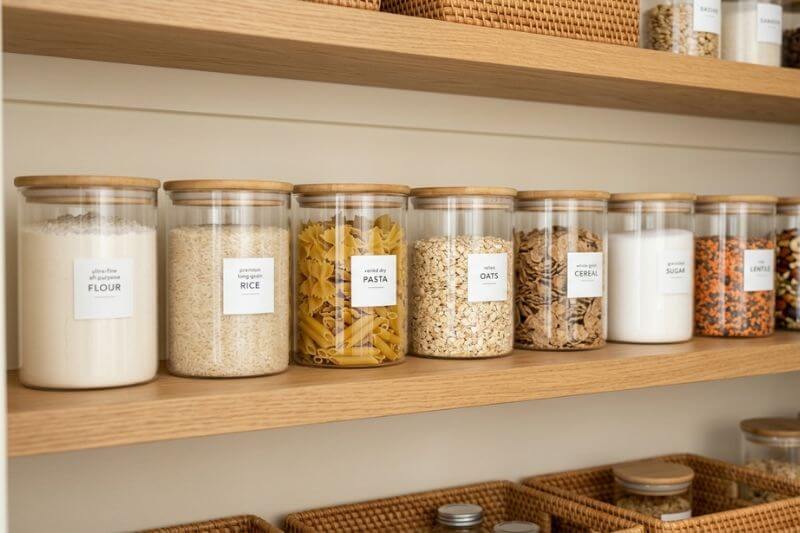
One of the easiest ways to organize any pantry is by transferring dry foods into clear airtight containers.
They’re perfect for flour, rice, pasta, sugar, cereal, lentils, and snacks because you can instantly see what’s inside and how much is left. They also keep food fresher for longer by protecting it from moisture and pantry pests.
This simple change creates a cleaner look and makes grocery shopping easier because you’ll know exactly what needs to be restocked.
After switching to clear containers, I no longer had to open three different jars just to find what I needed. A glance was enough, and keeping track of groceries became much easier.
Best for:
- Rice
- Flour
- Pasta
- Sugar
- Cereals
- Lentils
- Oats
⭐ Why it works:
Clear containers reduce visual clutter, save shelf space, and help prevent buying duplicate groceries.
2. Choose Square Containers Instead of Round Ones
Not all storage containers use space equally.
Square and rectangular containers fit neatly next to each other, allowing you to use almost every inch of your shelves. Round containers leave empty gaps between them, which means less storage space and a more cluttered pantry.
If you’re buying new containers, choose stackable square designs whenever possible. They look cleaner and are much easier to organize.
⭐ Expert Tip:
Buying matching stackable containers once is usually more affordable in the long run than replacing mismatched containers every few months.
3. Create Pantry Zones Instead of Random Shelves
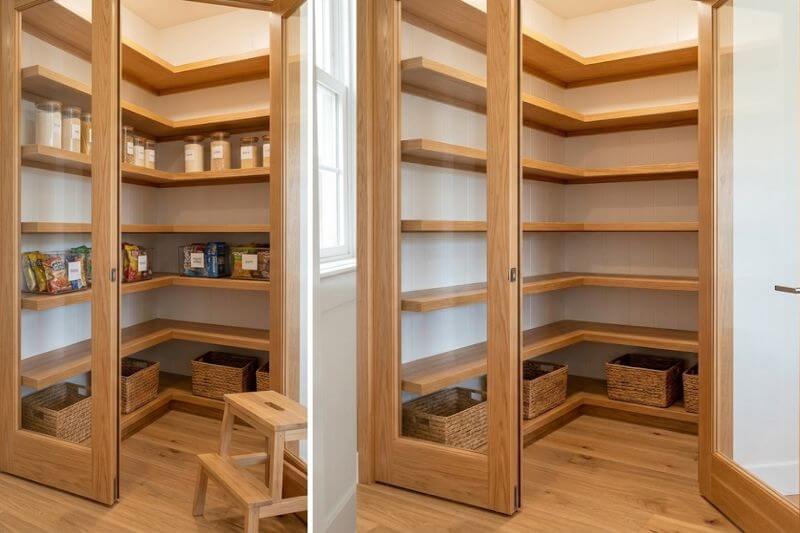
One of the easiest ways to organize a pantry is to give every category its own dedicated space. Instead of placing items wherever they fit, divide your pantry into zones based on how often you use them.
For example, keep breakfast foods together, store baking ingredients in one area, and place snacks in their own basket. Daily essentials like tea, coffee, cooking oil, and spices should stay at eye level so they’re always within easy reach.
A simple zoning system makes cooking faster because you know exactly where everything belongs.
Before organizing your pantry, make sure your shelves are clean. If they need a refresh, check out our guide on Natural Kitchen Cleaning Hacks to clean your pantry using simple household ingredients before setting everything back in place.
I also found that grouping similar items together made cooking feel much less stressful. Instead of searching shelf after shelf, I knew exactly where everything belonged.
Suggested Pantry Zones
- ✔ Breakfast Foods
- ✔ Pasta & Rice
- ✔ Baking Supplies
- ✔ Snacks
- ✔ Canned Goods
- ✔ Tea & Coffee
- ✔ Spices
- ✔ Oils & Sauces
⭐ Why it works:
Grouping similar items reduces clutter, saves time during meal prep, and makes grocery shopping easier.
💚 Her Kitchen Guide Tip
Label each basket or shelf with its category. Even children and other family members will know exactly where to put things back.
4. Follow the FIFO Method to Reduce Food Waste
If food often expires before you use it, the FIFO method can make a big difference.
FIFO stands for First In, First Out. It simply means placing newer groceries behind older ones so the oldest items are always used first.
This small habit helps reduce food waste, saves money, and keeps your pantry stocked more efficiently.
Whenever you come home from grocery shopping, take a minute to move older products to the front before putting new ones away.
According to the USDA Food Safety and Inspection Service, rotating older food to the front and using it first can help reduce food waste and make pantry management easier.
⭐ Why it works:
You’ll use older products before they expire, reducing waste and unnecessary spending.
⭐ Quick Tip:
Use a small marker to write the purchase date on flour, rice, lentils, or other bulk items.
5. Maximize Vertical Space with Shelf Risers
Many pantry shelves have unused vertical space. Shelf risers let you create a second level, making it much easier to see and access everything.
Instead of stacking cans or jars on top of each other, arrange them in rows using a shelf riser. This instantly doubles your usable space without needing a larger pantry.
Shelf risers work especially well for canned foods, spices, mugs, and small containers.
⭐ Best for:
Canned goods, sauces, spice jars, and baking ingredients.
⚠️ Common Mistake:
Avoid stacking heavy cans too high. It makes them harder to reach and increases the chance of items falling.
6. Use Baskets to Keep Small Items Together
Snack packets, seasoning mixes, instant noodles, and baking decorations can quickly make a pantry look messy.
Instead of leaving these loose on the shelf, store them in labelled baskets. If you’re looking for more smart storage ideas, don’t miss our guide on Kitchen Organization Ideas. When everything has a designated home, your pantry stays tidy even after a busy week.
Choose baskets with handles so you can easily pull them out and grab what you need.
Great Categories for Pantry Baskets
- Kids’ Snacks
- Baking Supplies
- Breakfast Bars
- Tea & Coffee
- Instant Soups
- Sauce Packets
💡 Why it works:
Baskets keep similar items together, prevent clutter, and make shelves easier to clean.
7. Organize Deep Pantry Shelves the Smart Way
Deep pantry shelves often become “black holes” where food disappears behind larger containers.
If you’ve ever found expired pasta or an extra bag of flour months later, you’re not alone. This is one of the most common pantry organization problems people talk about online.
To make deep shelves more functional:
- Store frequently used items at the front.
- Place backup supplies at the back.
- Use pull-out bins or clear storage trays.
- Add a Lazy Susan for bottles, sauces, and jars.
This setup makes every item easy to reach without unloading the entire shelf.
⭐ Expert Tip:
Pull-out bins are much more practical than fixed containers because you can slide everything forward with one hand.
8. Make the Most of Your Pantry Door
The back of your pantry door is often overlooked, but it can provide valuable extra storage, especially in small kitchens.
An over-the-door organizer is perfect for storing lightweight items like spices, seasoning packets, foil, plastic wrap, zip-top bags, and small snack packs.
Using this hidden space frees up your shelves for larger pantry staples while keeping everyday essentials within easy reach.
This is one of the easiest upgrades you can make without changing your pantry layout.
⭐ Why it works:
It creates extra storage without taking up any shelf space.
💚 Her Kitchen Guide Tip
Avoid placing heavy bottles on door organizers. Reserve them for lighter items to prevent unnecessary strain on the door.
9. Label Everything So Everyone Knows Where It Belongs
A well-organized pantry can quickly become messy again if no one knows where items should go.
Simple labels make a big difference. They help every family member return things to the right place, making your organization system much easier to maintain.
You can use waterproof labels, chalkboard labels, or even a label maker for a clean and consistent look.
Some useful categories include:
- Flour
- Rice
- Pasta
- Sugar
- Snacks
- Breakfast
- Spices
- Baking Supplies
⭐ Why it works:
Labels eliminate guesswork and help everyone keep the pantry organized.
10. Keep a Pantry Inventory to Avoid Buying Duplicates
Have you ever come home with another bag of pasta or an extra bottle of ketchup, only to discover you already had one hidden at the back of your pantry?
It happens more often than people realize.
Keeping a simple pantry inventory helps you track what you already have before heading to the grocery store.
You don’t need anything fancy. A small whiteboard, notepad, or even a note on your phone works perfectly.
Update it whenever an item is running low so your next shopping trip becomes faster and more organized.
💚 Her Kitchen Guide Tip
Check your pantry before making your grocery list. It only takes a few minutes and can save you money every month.
11. Choose Budget-Friendly Organizers That Actually Work
Creating an organized pantry doesn’t have to be expensive.
Many affordable storage solutions work just as well as premium organizers.
Here are a few budget-friendly ideas:
- Repurpose glass jars for dry foods.
- Use sturdy baskets from local discount stores.
- Reuse clean plastic containers for snacks.
- Add simple shelf risers instead of buying new cabinets.
- Store seasoning packets in small bins or magazine holders.
The goal is to create a system that works for your family, not to copy a perfectly styled pantry from social media.
⚠️ Common Mistake:
Don’t buy organizers just because they look nice. Always measure your shelves first and choose products that fit your space.
12. Make Small Pantries Feel Bigger with Smart Storage
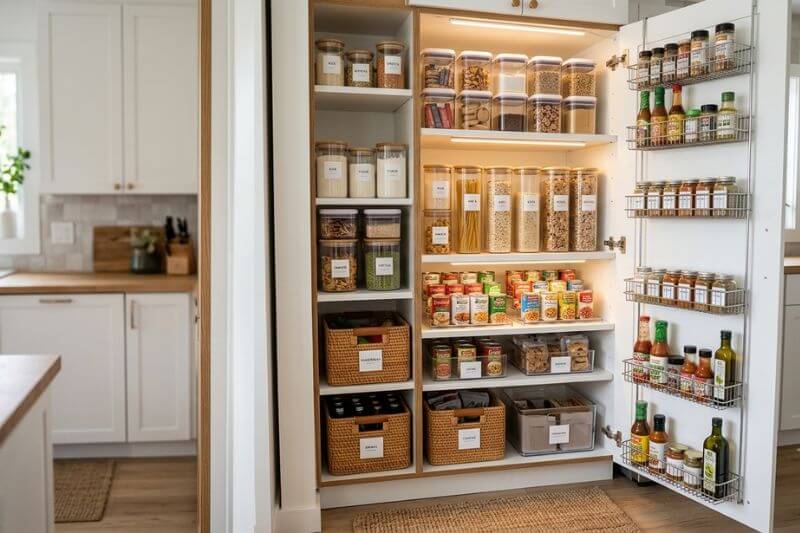
A small pantry doesn’t mean you have to sacrifice storage. The secret is making every inch count.
Use stackable containers instead of oversized boxes. Store frequently used items at eye level and move backup supplies to higher shelves.
Door organizers, under-shelf baskets, and slim storage bins can instantly create extra storage without taking up more room.
Clear containers also make small spaces feel less cluttered because everything is easy to see at a glance.
💡Quick Answer:
The best small pantry organization ideas focus on using vertical space, grouping similar items, and choosing stackable storage solutions.
13. Create a Dedicated Snack Station
If your family is always searching for snacks, giving them a dedicated section can save time and reduce mess.
Use one basket for chips, another for granola bars, and another for crackers or healthy snacks.
Keeping everything together makes it easier for both kids and adults to grab what they need without pulling everything off the shelf.
It’s also a simple way to see when snacks are running low before your next grocery trip.
⭐ Why it works:
A snack station keeps busy family members from disturbing the rest of your pantry every time they’re hungry.
14. Organize Your Pantry for the Way You Cook
One mistake many people make is copying someone else’s pantry layout without thinking about their own cooking habits.
Instead of organizing based on what looks good in photos, organize based on what you use most often.
If you cook every day, keep flour, rice, spices, cooking oil, and your favourite seasonings within easy reach.
If you bake often, dedicate one shelf to baking ingredients.
Your pantry should support your daily routine, not create extra work.
⭐ Expert Tip:
The most beautiful pantry isn’t always the most practical. Focus on convenience first and appearance second.
15. Spend Just 5 Minutes a Week Maintaining Your Pantry
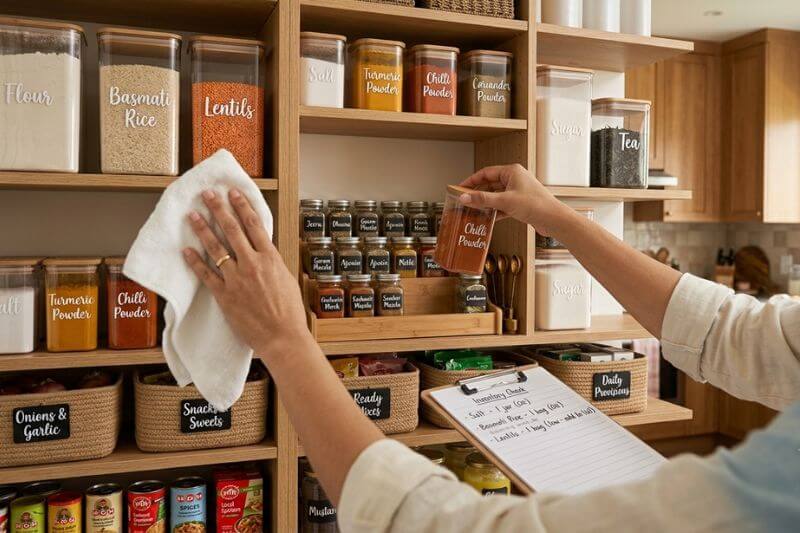
I don’t spend hours re-organizing my pantry anymore. A quick five-minute reset once a week is usually enough to keep everything in order. It’s a small habit that saves a lot of time later.
The biggest difference between an organized pantry and a messy one isn’t the containers. It’s consistency.
Set aside just five minutes each week to:
✔ Put items back in their proper place.
✔ Wipe away crumbs or spills.
✔ Move older products to the front.
✔ Check expiration dates.
✔ Add low-stock items to your grocery list.
These small habits prevent clutter from building up and make future organizing much easier.
💚 Her Kitchen Guide Tip
Pair your weekly pantry reset with your regular kitchen cleaning routine. It’s a simple habit that helps your pantry stay clean, organized, and ready for the week ahead.
Before your weekly reset, freshen up your shelves with these Natural Kitchen Cleaning Hacks to keep your pantry clean without using harsh chemicals.
Best Pantry Organization Products Worth Buying
If you’re just getting started, you don’t need to buy every organizer at once. Start with a few essentials that make the biggest difference. For more pantry styling inspiration, these pantry makeover ideas are worth exploring.
| Product | Best For |
|---|---|
| Clear Airtight Containers | Flour, rice, pasta, cereal |
| Stackable Shelf Risers | Cans and jars |
| Lazy Susan | Deep shelves |
| Storage Baskets | Snacks and small packets |
| Label Maker | Pantry labels |
| Over-the-Door Organizer | Spices and wraps |
⭐Buying Tip:
Invest in quality containers for everyday pantry staples first. You can always add more organizers over time as your storage needs grow.
Pantry Organization Tips for Pakistani and South Asian Kitchens
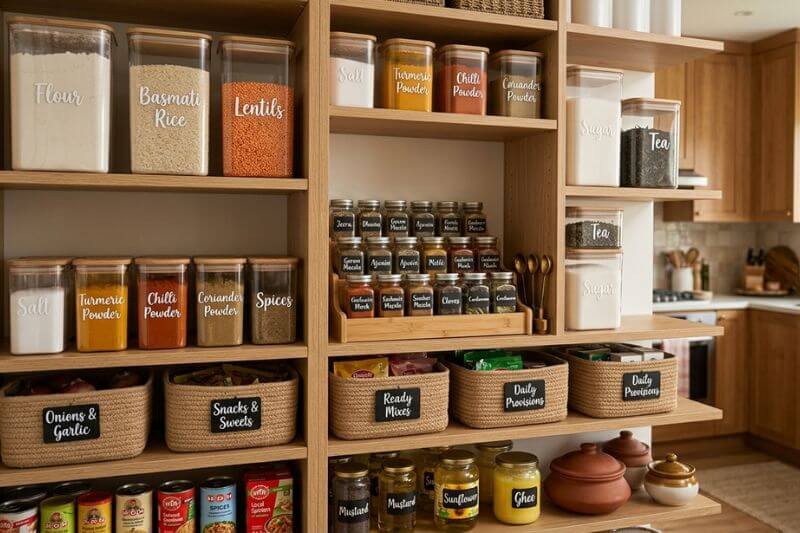
If you live in Pakistan, India, or any South Asian country, chances are your pantry stores much more than cereal and pasta. Large bags of flour, rice, lentils, and dozens of spices need a different storage approach.
If you cook South Asian meals regularly, you probably know how quickly bags of flour, lentils, rice, and spice packets can take over your pantry. Giving each category its own dedicated space made meal preparation much smoother and helped me keep everything within easy reach.
Most pantry organization guides focus on Western kitchens, but South Asian homes have different storage needs. We often buy groceries in bulk, keep several types of lentils and rice, and have a wide variety of spices that need easy access.
Here are some practical pantry organization ideas for desi kitchens without making it complicated.
Store Flour, Rice, and Lentils in Large Airtight Containers
Items like flour, rice, lentils, chickpeas, and sugar are usually bought in larger quantities. Leaving them in their original bags can make your pantry look cluttered and may expose them to moisture or pantry pests.
Transfer these staples into large airtight containers as soon as you bring them home.
Clear containers also make it easy to see when you’re running low, so there are no surprises while cooking.
⭐Best for:
Flour, basmati rice, sella rice, lentils, chickpeas, sugar, and oats.
Create a Dedicated Masala Station
Spices are the heart of every Pakistani and Indian kitchen, so they deserve their own organized space.
Instead of keeping masala packets in different cabinets, store them together in one easily accessible area.
You can organize spices by category, such as the following:
- Everyday spices
- Whole spices
- Blended masalas
- Baking spices
Whether you use a spice rack, drawer organizer, or labeled jars, keeping everything together makes cooking much faster.
💚 Her Kitchen Guide Tip
Place the spices you use every day, like turmeric, red chilli powder, cumin, and coriander, at the front for quick access.
Keep Monthly Grocery Stock Separate
Many families buy groceries for the entire month.
Instead of mixing backup stock with daily-use items, keep them on a separate shelf or in labelled storage bins.
This makes it much easier to know what you’re currently using and what needs to be restocked.
Prevent Pantry Pests Naturally
Warm and humid weather can sometimes attract pantry pests.
To help protect dry foods:
- Always keep containers tightly sealed.
- Store food in dry areas.
- Clean up spills quickly.
- Check older groceries before adding new stock.
A clean and dry pantry is one of the best ways to avoid unwanted insects.
Common Pantry Organization Mistakes to Avoid
Even the best storage containers won’t help if your pantry isn’t organized properly.
Here are a few mistakes many people make.
Buying Containers Before Measuring Shelves
Always measure your shelves first. Containers that are too tall or too wide waste money and valuable storage space.
Keeping Everything in Its Original Packaging
Boxes and bags take up more room and create visual clutter.
Whenever possible, transfer dry foods into matching airtight containers.
Ignoring Expiration Dates
Expired food often gets pushed to the back of the shelf.
Check dates regularly and move older products to the front.
Buying More Than Your Pantry Can Hold
Bulk shopping is great, but only if you have enough storage space.
Buy according to your family’s needs and available pantry space.
Organizing Once and Forgetting About It
Even a perfectly organized pantry needs regular maintenance.
Spending just a few minutes each week keeps everything under control.
Quick Pantry Organization Checklist
Quick Pantry Organization Checklist
Before you finish, use this simple checklist to make sure you’ve covered the essentials.
- ✅ Removed expired food
- ✅ Cleaned every shelf
- ✅ Measured pantry shelves
- ✅ Grouped similar foods together
- ✅ Used clear airtight containers
- ✅ Added labels
- ✅ Created pantry zones
- ✅ Organized snacks
- ✅ Stored backup groceries separately
- ✅ Planned a weekly pantry reset
Keeping your pantry organized also helps reduce unnecessary food waste. EPA food waste tips
⭐Quick Tip:
You don’t have to finish everything in one day. Start with one shelf, then move on to the next. Small improvements quickly add up.
Frequently Asked Questions (FAQ)
Q: What is the best way to organize a pantry?
A: The best pantry organization ideas include removing expired food, grouping similar items together, using clear airtight containers, labelling everything, and storing frequently used foods at eye level. Creating dedicated zones also makes your pantry easier to maintain.
Q: How do I organize a small pantry?
A: Use vertical space with shelf risers, stackable containers, and over-the-door organizers. Clear containers and labeled baskets help keep everything visible while reducing clutter.
Q: Are clear containers really worth it?
A: Yes. Clear containers help you see what you already have, reduce duplicate grocery purchases, keep food fresher, and create a cleaner-looking pantry.
Q: How often should I organize my pantry?
A: A deep organization every few months is usually enough, but spending five minutes each week putting items back in place will help your pantry stay organized all year.
Q: What are the best pantry organization ideas on a budget?
A:You don’t need expensive organizers. Glass jars, reusable containers, baskets from local stores, shelf risers, and simple labels can make a big difference without spending much.
You can also explore additional pantry organization ideas from professional organizers.
Recommended Pantry Organization Products
You don’t need to buy every organizer at once. Start with a few essentials that match your pantry size, cooking habits, and your family’s needs. Over time, you can add more as your storage requirements grow. These products can make organizing easier and help you maintain a clutter-free pantry.
At a Glance: Best Pantry Organization Products
| Product | Best For |
|---|---|
| Clear Airtight Containers | Flour, rice, pasta, sugar, lentils |
| Pantry Label Set | Food containers and spice jars |
| Lazy Susan Turntable | Oils, sauces, jams, and deep shelves |
| Stackable Shelf Risers | Cans, jars, and mugs |
| Storage Baskets | Snacks, tea, coffee, and packets |
| Over-the-Door Organizer | Spices, wraps, foil, and zip bags |
1. Clear Airtight Food Storage Containers
Why I Recommend It
These containers keep dry foods fresh, save shelf space, and make it easy to see what’s running low. They’re one of the best investments for any pantry.
Best For:
- Flour
- Rice
- Sugar
- Pasta
- Lentils
- Oats
- Cereal
2. Pantry Label Set
Labels help everyone in the family return items to the right place. They also make your pantry look clean and organized.
Best For:
- Containers
- Spice jars
- Snack baskets
- Storage bins
👉 Recommended Product: Coming Soon
3. Lazy Susan Turntable
If you have deep shelves or corner cabinets, a Lazy Susan lets you rotate bottles and jars instead of reaching to the back.
Best For:
- Cooking oils
- Sauces
- Vinegar
- Honey
- Jam
- Small jars
4. Stackable Shelf Risers
Shelf risers create an extra level on your shelves, making it easier to store cans, mugs, and jars without stacking them on top of each other.
5. Storage Baskets
Storage baskets are perfect for grouping similar items together and keeping your pantry clutter-free.
Best For:
- Chips
- Snacks
- Instant noodles
- Baking supplies
- Tea and coffee
6. Over-the-Door Pantry Organizer
This organizer uses the back of your pantry door to create extra storage without taking up shelf space.
Best For:
- Spice packets
- Foil
- Plastic wrap
- Zip bags
- Small bottles
Final Thoughts
When I first started organizing my own kitchen, I thought I needed more cabinets. But I quickly realized I simply needed a better system. Even a few small changes made cooking easier and grocery shopping less stressful.
So you don’t have to organize your entire pantry in one afternoon. Start with one shelf, one basket, or even one container. Small improvements add up faster than you think, and before long, opening your pantry will feel satisfying instead of stressful.
A well-organized pantry isn’t about having a picture-perfect kitchen. It’s about creating a space that saves you time, reduces food waste, and makes everyday cooking easier.
Start with one shelf. Replace a few bulky packages with clear containers. Create simple zones that make sense for your family. Then spend a few minutes each week maintaining your new system.
Over time, these small habits will completely transform the way your pantry looks and functions.
I’d love to know which pantry organization idea you’re excited to try first. Share your favourite tip in the comments below!
You May Also Like
👉 15 Natural Kitchen Cleaning Hacks That Save Time, Money, and Effort
Explore More Kitchen Guides
Looking for more practical kitchen tips, appliance buying guides, and easy recipes? Browse our latest articles and discover more helpful kitchen guides.
Amazing website! The content is clear, helpful, and easy to follow. I found the kitchen tips and guides very useful. Keep up the great work and continue sharing such valuable information. Highly recommended!
Thank you so much, Emadil! I’m really glad you found the kitchen tips and pantry organization guide helpful. Stay tuned for more smart kitchen ideas!