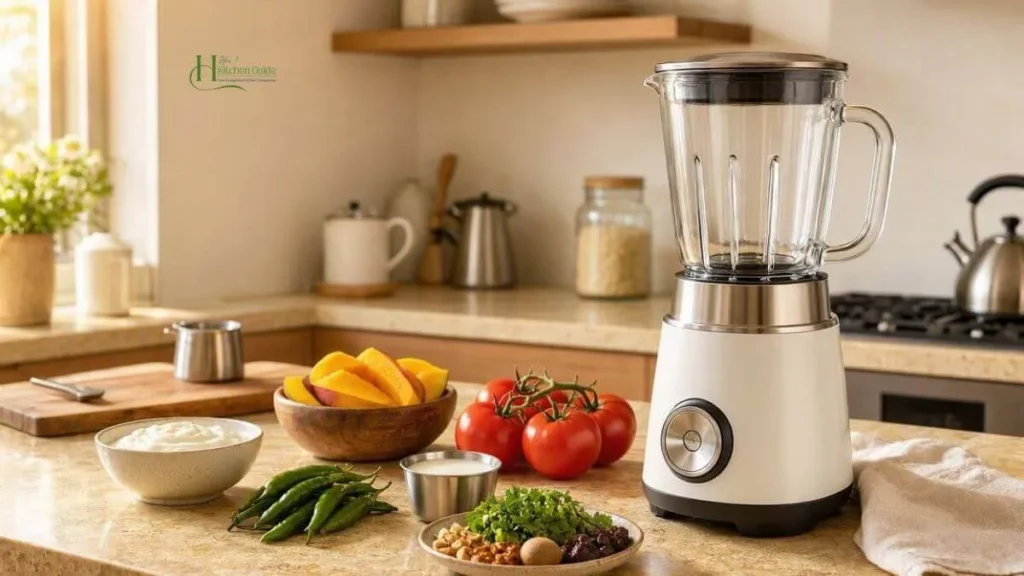
Buying a blender sounds simple until you start looking at the options available in Pakistan.
One blender says 500W, another says 800W, another 1200W. Some come with a jug, dry mill and wet mill, while others add a chopper, whisk or juicer. Then there are brands such as Anex, Westpoint, Dawlance, Philips, Kenwood, Braun, Panasonic and several imported options.
So which one is actually worth buying?
The answer is not simply the blender with the highest wattage or the most attachments.
For a typical Pakistani kitchen, the right blender should match the things you actually prepare: lassi, milkshakes, chutney, ginger-garlic paste, masala, tomato-onion bases, soups and everyday cooking preparations.
In this guide, we’ll look at the best blender types in Pakistan, blender prices, popular brands, wattage, jar materials, useful attachments, features worth paying for, common mistakes, and how to choose the right blender for your own kitchen.
Quick Answer: Which Blender Is Best for Most Pakistani Homes?
For most Pakistani families, a 500W to 800W jug blender with a 1.5-litre jar, stainless-steel blades and useful wet/dry grinding attachments is a practical all-round choice.
This type of blender can handle many everyday jobs, including:
- Lassi
- Milkshakes
- Smoothies
- Green chutney
- Ginger-garlic paste
- Tomato and onion cooking bases
- Soups
- Fruit and vegetable purees
- Some dry spice grinding when a suitable mill is included
But there is an important exception.
If you mainly make soup or baby food for one or two people, a hand blender may be more convenient. If you regularly crush ice, blend nuts or prepare large quantities, a heavy-duty blender may be a better investment.
Quick Blender Buying Guide
| Your main need | Recommended blender | Useful power range |
|---|---|---|
| Everyday family cooking | Jug blender | 500W–800W |
| Lassi & milkshakes | Jug blender | 500W–800W |
| Chutney & wet masala | Jug + wet mill | 500W–800W |
| Dry spices | Blender + dry mill | 500W–800W |
| Soup & baby food | Hand blender | 300W–700W |
| Single-serving smoothies | Personal/bullet blender | 300W–600W |
| Frequent ice & hard ingredients | Heavy-duty blender | 1000W+ |
| Small kitchen | Compact/hand blender | 300W–600W |
The key is to buy for your kitchen, not for the biggest number on the box.
Blender Price in Pakistan in 2026
The blender price in Pakistan can vary significantly depending on brand, motor power, jar material, attachments, warranty and whether the model is locally available or imported.
As a broad market guide, you may see prices in these ranges:
| Blender category | Approximate price range | Suitable for |
|---|---|---|
| Basic hand blender | Rs. 3,500–8,000 | Soup, baby food, small portions |
| Basic jug blender | Rs. 7,000–12,000 | Light everyday use |
| Mid-range jug blender | Rs. 12,000–20,000 | Family cooking and regular use |
| 2-in-1 / 3-in-1 blender sets | Rs. 8,500–22,000+ | Blending + grinding |
| Juicer/blender combinations | Rs. 10,000–25,000+ | Multiple kitchen tasks |
| Premium/heavy-duty models | Rs. 20,000+ | Ice, nuts, large batches |
These are indicative ranges, not fixed current prices. Prices can change because of sales, exchange rates, imports, seller discounts and availability.
You may also find basic models below these ranges and premium imported machines far above them.
Note: Before buying online, always check the current listing price, seller rating, warranty, return policy and delivery charges.
Popular Blender Brands in Pakistan
If you search for blenders in Pakistan, you’ll come across both local-market brands and international brands.
Some of the names that commonly appear in Pakistani blender research and listings include:
Anex
Anex is a familiar name in Pakistani kitchen appliances, particularly in the budget and mid-range segment.
Models such as Anex AG-690UB and other Anex blender/grinder combinations have appeared in Pakistani market research.
Anex can be worth considering if you want:
- Blender + grinder functionality
- Multiple attachments
- A mid-range appliance
- A model aimed at everyday Pakistani cooking
However, don’t choose a model based on brand name alone. Compare its actual wattage, jar capacity, attachments, warranty and current seller listing.
Westpoint
Westpoint is another commonly seen appliance brand in Pakistan.
Models such as Westpoint WF-9491 and WF-9715 have appeared in blender product research.
Westpoint models can be particularly interesting for buyers looking for multi-function appliances with grinding or additional attachments.
Again, compare the specific model rather than assuming every Westpoint blender has the same specifications.
Dawlance
Dawlance is a well-known Pakistani appliance brand and is another name worth checking when comparing blenders.
The research data you shared showed Dawlance blender pricing in the general mid-range, with some models appearing around the Rs. 8,500–15,000 range in earlier market information.
Before buying, check the model’s current warranty and after-sales support through Dawlance’s official support page.
Because prices and models change, check the current official or retailer listing before publishing a specific price.
Philips
Philips sits more toward the established international-brand side of the market.
One model that appeared in the research you shared was the Philips 5000 Series HR3033/00.
Philips may appeal to buyers who place greater importance on established brand support, design and build quality, but the price can be considerably higher than basic local-market options.
Check the official Philips Pakistan support and warranty information before buying.
Braun
Braun is another international option, particularly relevant if you’re looking for a hand blender.
The Braun MultiQuick range appeared in the research material, including the Braun MQ 5245 WH.
Braun can be particularly relevant for people who prefer an immersion/hand blender rather than a traditional countertop jug blender.
Kenwood
Kenwood is another established kitchen-appliance brand that Pakistani shoppers may come across.
Its products can sit at the higher end of the market depending on the model and attachments.
Panasonic
Panasonic is another international brand worth considering when comparing premium or established-brand appliances.
Nutribullet / Nutricook
For people particularly interested in smoothies, personal blending and compact kitchen appliances, names such as Nutribullet and Nutricook may also appear in Pakistani shopping searches.
A Note About Blender Brands and Prices
You may find very different prices for what appears to be the same brand.
That can happen because of:
- Different models
- Different wattages
- Number of attachments
- Jar capacity
- Local vs imported stock
- Seller pricing
- Warranty differences
- Sales and promotions
So instead of asking only:
“Which blender brand is best?”
a better question is:
“Which specific model gives me the features I need at a price I can afford?”
That small change can save you from paying extra for features you’ll never use.
A simple way to think about the market is:
Budget and mid-range
Brands such as Anex, Westpoint and Dawlance are worth comparing when your priority is practical everyday use and multiple functions at a relatively accessible price.
Premium/international
Philips, Braun, Kenwood and Panasonic may be more relevant when you’re looking for an established international brand or a more specialized appliance.
Personal blending
Nutribullet and Nutricook can be worth considering if your priority is smoothies, protein shakes and compact personal blending.
This doesn’t mean one brand is automatically better than another. The specific model matters more than the logo on the box.
Blender vs Juicer: Which One Should You Buy?
This is one of the most common points of confusion.
A blender and a juicer perform different jobs.
| Feature | Blender | Juicer |
|---|---|---|
| Result | Thick drink/puree | Thin juice |
| Fibre | Mostly retained | Much of the pulp is separated |
| Best for | Shakes, lassi, chutney, smoothies, soups | Fruit & vegetable juice |
| Cooking use | Very useful | Limited |
| Cleanup | Usually simpler | Often more parts |
| Pakistani cooking | Very useful | Less useful |
If your normal kitchen routine includes mango shakes, lassi, green chutney, ginger-garlic paste, tomato-onion bases and soups, a blender will probably be more useful as your first appliance.
A juicer makes more sense if you specifically want fresh, thin fruit or vegetable juice.
Types of Blenders Available in Pakistan
Understanding the different types will make your buying decision much easier.
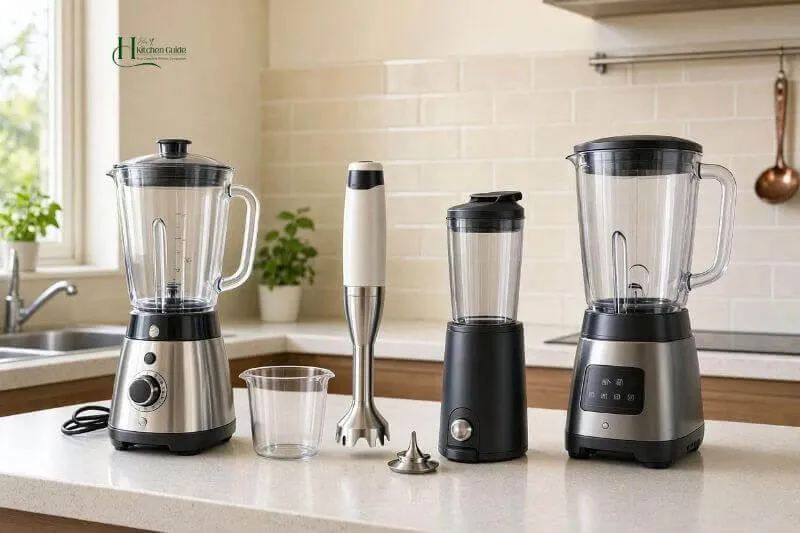
1. Jug or Jar Blender
This is the traditional countertop blender with a motor base and a larger jar.
It is usually the most versatile choice for a family kitchen.
Best for:
- Lassi
- Milkshakes
- Smoothies
- Chutney
- Cooking bases
- Larger batches
- General kitchen use
Typical useful power: 500W–800W
Look for: 1.5L or suitable family-size jar, stainless-steel blades, pulse function and wet/dry mills.
2. Hand or Stick Blender
A hand blender, also called an immersion blender, is a long handheld appliance with blades at the bottom.
It is particularly useful when you want to blend food directly in a pot or container.
Best for:
- Soups
- Purees
- Baby food
- Small portions
- Quick blending
One advantage is convenience. You don’t have to transfer a pot of soup into a large blender jar.
However, a hand blender is not usually the best choice for dry spice grinding, large batches or regular heavy ice crushing.
Looking for an affordable & powerful hand blender?
Check out the RAF 800W Hand Blender & Chopper Set on Daraz (Great Value for Money).
3. Personal or Bullet Blender
Personal blenders are designed for one or two servings.
They can be useful for:
- Smoothies
- Protein shakes
- Quick breakfast drinks
- Single portions
They are also attractive for smaller kitchens because they take up less counter space.
The trade-off is capacity. If your family drinks a large jug of lassi, a personal blender may feel too small.
4. Heavy-Duty Blender
Heavy-duty blenders are designed for demanding use.
They may have:
- Higher wattage
- Stronger motors
- Larger or reinforced jars
- Stronger blades
- Better capacity for heavier mixtures
Best for:
- Frequent ice crushing
- Nuts
- Thick mixtures
- Large batches
- Frequent heavy use
- Small food businesses
For occasional household use, however, buying a heavy-duty model may simply mean spending more money and giving up more counter space.
How Many Watts Do You Need?
This is where many buyers get distracted.
A blender showing 1200W can look much more powerful than one showing 600W, but wattage alone doesn’t tell the whole story.
Blade design, motor construction, jar shape, load size and overall build quality all affect real-world performance.
| Wattage | Suitable for | Typical user |
|---|---|---|
| 200W–400W | Soft fruits, soups, baby food | Light users |
| 500W–800W | Lassi, shakes, chutney, cooking bases | Most families |
| 800W–1000W | Thicker mixtures, more frequent use | Regular users |
| 1000W+ | Harder ingredients, heavy workloads | Heavy users |
Why 500W–800W is often a practical range
For many Pakistani kitchens, this range provides a good balance between everyday functionality and price.
But don’t treat 500W–800W as a strict rule.
A good-quality 600W machine can be more useful than a poorly designed 1000W model.
Likewise, if you genuinely need to crush ice, blend nuts or process large quantities frequently, spending more on a powerful machine can make sense.
What About Copper Motors?
You will often see blender listings highlighting copper motor winding.
Copper winding can be a useful feature, but be careful with exaggerated marketing claims.
Don’t assume that:
“Copper motor = automatically best blender.”
Motor quality depends on the overall construction, design, cooling, workload and manufacturing quality.
So if a product advertises a copper motor, consider it as one factor, not the deciding factor.
Jar Material: Glass vs Plastic vs Stainless Steel
The jar is something many buyers ignore until they actually start using the appliance.
Heat-resistant glass
Advantages:
- Resists stains
- Less likely to retain strong food odours
- Easy to see contents
Disadvantages:
- Heavy
- Can break if dropped
- Can be affected by sudden temperature changes
BPA-free plastic
Advantages:
- Lightweight
- Easier to handle
- Usually more affordable
- Less likely to shatter
Disadvantages:
- Can scratch
- May become cloudy
- Can retain strong food smells over time
Stainless steel
Advantages:
- Very durable
- Doesn’t break like glass
- Suitable for certain heavy-duty applications
Disadvantage:
You cannot see the food while it is blending.
Which one should you choose?
For many homes, a 1.5L glass or good-quality BPA-free plastic jar is practical.
💚 Her Kitchen Guide Tip:
If you regularly blend hot food, always check the manufacturer’s instructions first. Not every blender jar is designed for hot liquids.
What Size Blender Jar Do You Need?
Jar capacity should match your household.
Around 0.5L–0.8L
Good for:
- Single smoothies
- Protein shakes
- Personal use
Around 1L
Good for:
- Small households
- Moderate portions
Around 1.5L
A practical size for many families.
Useful for:
- Lassi
- Milkshakes
- Smoothies
- Cooking preparations
1.75L or larger
Better for:
- Large families
- Bigger batches
- Frequent entertaining
But remember that a bigger jar also takes more storage and counter space.
Dry Mill vs Wet Mill: Why They Matter in Pakistani Cooking
This is one area where Pakistani kitchens can have very different requirements from a typical Western kitchen.
If you’re making:
- Green chutney
- Mint chutney
- Ginger-garlic paste
- Wet masala
- Cumin powder
- Coriander powder
- Black pepper
- Other spice mixtures
a blender with suitable grinding attachments can be much more useful.
Wet mill
Useful for pastes and wet ingredients.
Dry mill
Useful for dry spices and smaller dry ingredients.
If you know you’ll use these attachments regularly, they can be worth paying for.
What Can You Actually Make With a Blender?
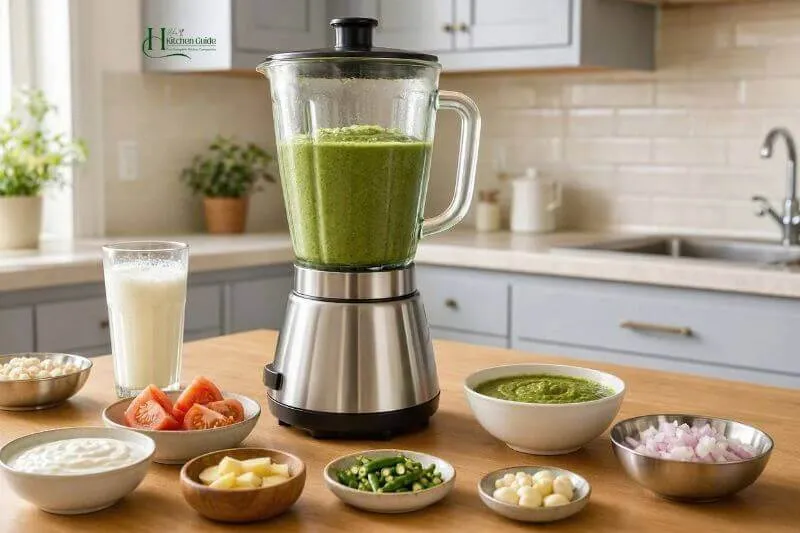
A blender doesn’t have to be a “smoothie machine.”
In a Pakistani kitchen, it can become a daily cooking helper.
Lassi
A jug blender is particularly convenient for family-size lassi.
Chutney
Green chutney, mint chutney and coriander chutney can be prepared quickly.
Ginger-Garlic Paste
A suitable wet grinding attachment can reduce the amount of manual chopping and grinding.
Tomato-Onion Cooking Base
Blended ingredients can help prepare smooth gravies and sauces.
Masala Paste
Some curries require smooth or semi-smooth wet masala.
Milkshakes
Mango shake, banana shake and other milk-based drinks are obvious uses.
Smoothies
Personal and jug blenders both work, depending on serving size.
Soups
A hand blender is especially convenient here.
Baby Food
A hand or small blender can be useful for smooth purees, depending on the ingredients and manufacturer’s instructions.
Features Worth Paying For
Not every feature advertised on a blender box deserves your money.
| Feature | Worth considering? | Why |
|---|---|---|
| Stainless-steel blades | Yes | Important for regular use |
| Pulse function | Yes | Better control over texture |
| Wet mill | Yes | Useful for chutney and pastes |
| Dry mill | Yes | Useful for spices |
| Good jar seal | Yes | Helps prevent leaks |
| Replacement seals | Yes | Useful for long-term ownership |
| Replacement jar | Yes | Makes the appliance easier to maintain |
| Multiple speeds | Optional | Useful but not essential |
| 10+ electronic speeds | Usually unnecessary | Most home cooks use only a few |
| Touchscreen | Usually unnecessary | Adds complexity and cost |
| App connectivity | Rarely useful | Not important for normal home use |
Don’t Forget the Rubber Seal
This tiny component can make a surprisingly big difference.
If the seal around the jar or blade assembly wears out, you may start noticing leaks.
Before buying, especially if you plan to keep the blender for years, check whether the brand or seller provides replacement:
- Rubber seals
- Lids
- Jars
- Blade assemblies
A blender with easily available spare parts can be a much better long-term purchase.
Best Blender Options by Budget
Instead of saying that one particular machine is universally “best,” it is more useful to divide the choices according to your needs.
Best Budget Blender
If you mainly need soup, baby food, small portions or occasional drinks, a basic hand blender or compact jug blender may be enough.
Typical budget: Around Rs. 3,500–10,000
For a budget-friendly option under Rs. 4,000, you can consider this popular RAF 800W Multi-Purpose Hand Blender on Daraz which includes a whisk and chopper bowl
Best for: Students, singles, light users and small kitchens.
Best Mid-Range Blender for Most Families
For regular Pakistani cooking, look for:
- 500W–800W
- Around 1.5L jar
- Stainless-steel blades
- Pulse function
- Wet mill
- Dry mill
- Reliable seal
- Warranty
Typical budget: Around Rs. 12,000–20,000
This is the category where brands such as Anex, Westpoint and Dawlance are worth comparing.
Best Premium Blender
If you want a more established international brand or a higher-end machine, brands such as Philips, Braun, Kenwood and Panasonic may be worth investigating.
Depending on the specific model, these can move well beyond the mid-range budget.
Best Personal Blender
If your main purpose is:
- Protein shakes
- Smoothies
- Single portions
- Quick breakfast drinks
look at personal/bullet-style machines.
Brands such as Nutribullet and Nutricook may appear in this category, along with numerous budget options.
Best Heavy-Duty Blender
If you regularly:
- Crush ice
- Blend nuts
- Make thick mixtures
- Prepare large batches
- Use the blender heavily
consider a 1000W+ heavy-duty model.
Don’t buy this category simply because you want the “strongest” blender. Buy it because you actually need that level of performance.
Blender Options to Consider
Best for most families
Look for a 500W–800W jug blender with a 1.5L jar, stainless-steel blades, pulse function and wet/dry mills.
Best for: Lassi, shakes, chutney, soups and everyday cooking bases.
Best for small kitchens
Choose a compact jug blender or hand blender. A hand blender takes less storage space and is convenient for soup and baby food.
Best for: Singles, students and small kitchens.
Best for smoothies
Choose a 700W–1000W blender with a sturdy jar, strong blades and pulse function.
Best for: Frozen fruit, thicker smoothies and regular use.
Best for spice grinding
Choose a blender set that includes a separate dry mill. A wet mill is also useful for ginger-garlic paste and chutney.
Best for: Pakistani cooking and masala preparation.
Best heavy-duty option
Choose a 1000W+ blender only if you regularly crush ice, blend nuts or prepare large batches.
Best for: Large families and small food businesses.
Blender Models You May Come Across in Pakistan
These are examples of blender models commonly listed by Pakistani retailers and online marketplaces. Availability, specifications and prices can change, so always verify the current listing before buying.
(Check Current Price on Daraz Below)
- Anex AG-690UB
- Anex AG-128
- Westpoint WF-9491
- Westpoint WF-7701GL
- Westpoint WF-332
- Philips 5000 Series HR3033/00
- Braun MQ 5245 WH
- Geepas Power Plus 4-in-1
- Ninja BN750ME
- Various Silver Crest and RAF models
These names are useful as starting points for comparison, not as an automatic “Top 10.”
💚 Her Kitchen Guide Recommendation:
Before featuring any of these as a current recommendation on Her Kitchen Guide, verify:
- Current model availability
- Current Pakistan price
- Wattage
- Jar capacity
- Blade specifications
- Included attachments
- Seller
- Customer reviews
- Warranty
- Replacement parts
This is especially important with imported products because availability and prices can change quickly.
Blender Buying Guide for Small Kitchens
If your kitchen is small, don’t underestimate the importance of storage.
A large 2L jar may look impressive online but can become awkward if your countertop and cabinets are already crowded.
For a small kitchen, consider:
- Compact jug blender
- Personal blender
- Hand blender
- Stackable attachments
- Easy-to-store mill containers
A hand blender can be particularly useful because the main appliance takes very little storage space.
Blender Buying Guide for New Brides
If you’re setting up a kitchen from scratch, it is tempting to buy every appliance at once.
You don’t necessarily need to.
A versatile 500W–800W jug blender with a 1.5L jar and useful grinding attachments can cover many everyday jobs before you start adding specialized appliances.
If your cooking routine includes Pakistani gravies, chutneys, lassi, shakes and spice preparation, prioritize versatility.
This is also where buying a 2-in-1 or 3-in-1 blender/grinder set can make sense, provided the attachments are genuinely useful and replacement parts are available.
If you are setting up a new kitchen, my Kitchen Appliances for New Brides in Pakistan guide can help you prioritize essentials.
5 Things to Check Before Buying From Daraz or Another Online Store
If you’re shopping online, don’t stop at the product photo and headline price.
If you are comparing listings online, browse current blender listings on Daraz and check seller rating, reviews, warranty information and return policy before ordering.
1. Seller rating
Look at the seller, not just the product rating.
2. Recent reviews
Pay attention to comments about:
- Motor performance
- Leakage
- Jar quality
- Noise
- Heating
- Missing attachments
- Actual product received
3. Warranty
Check whether the warranty is official, seller-based, or unavailable.
4. Return policy
This is especially important for electrical appliances.
5. Spare parts
Search for replacement jars, seals and blades before purchasing.
A blender that costs a little more but has accessible replacement parts may be a better long-term choice.
Common Blender Buying Mistakes
Buying only because of wattage
1200W doesn’t automatically mean better.
Buying too many attachments
If you will never use the chopper or whisk, don’t pay a large premium for it.
Ignoring the seal
A leaking jar can make a good blender frustrating.
Ignoring replacement parts
This becomes a problem when a jar or seal breaks after a year.
Buying a juicer instead of a blender
Think about your actual kitchen tasks first.
Buying a heavy-duty blender for occasional use
More power can mean more price, noise and counter space.
Choosing an unknown seller just because the price is lower
The cheapest listing isn’t always the cheapest purchase in the long run.
How to Make Your Blender Last Longer
A little care can go a long way.
- Don’t exceed the maximum fill line.
- Avoid running the motor continuously for unnecessarily long periods.
- Add sufficient liquid when the recipe requires it.
- Use pulse mode where appropriate.
- Don’t force hard ingredients into a weak blender.
- Rinse the jar soon after use.
- Clean around the blade assembly carefully.
- Check the rubber seal periodically.
- Don’t pour hot liquids into a jar unless the manufacturer says it is designed for them.
- Stop using the appliance if you notice unusual burning smells, excessive heating or a sudden change in motor performance.
And after making thick ginger-garlic paste or chutney, clean the jar soon rather than leaving it until later. Dried paste around the blades is much harder to deal with.
Blender vs Food Processor: Which One Should You Buy?
These appliances overlap, but they are not identical.
Choose a blender if you mainly need:
- Lassi
- Shakes
- Smoothies
- Chutney
- Purees
- Sauces
- Liquid-based cooking preparations
Choose a food processor if you mainly need:
- Slicing
- Shredding
- Chopping
- Larger dry food preparation
- Dough-related tasks, depending on the model
💚 Her Kitchen Guide Tip:
If your main concern is drinks, pastes and smooth mixtures, start with a blender.
If your biggest kitchen problem is chopping and slicing large quantities of vegetables, a food processor may be more useful.
How to Choose the Best Blender in Pakistan: Simple 7-Step Checklist
Before you click Buy Now, ask yourself these seven questions:
1. What will I blend most often?
Lassi? Chutney? Soup? Smoothies? Spices?
2. How many people am I cooking for?
This determines jar capacity.
3. Do I need a dry mill?
If you regularly grind spices, the answer may be yes.
4. Do I need a wet mill?
Useful for chutneys, pastes and wet masalas.
5. How much power do I really need?
For most families, 500W–800W is a useful range.
6. Are replacement parts available?
Check before buying.
7. Is the seller and warranty reliable?
Especially important when buying online.
Frequently Asked Questions
What is the best blender in Pakistan?
For most Pakistani households, a 500W–800W jug blender with a 1.5L jar, stainless-steel blades, pulse function and useful wet/dry grinding attachments is a practical choice.
The best model, however, depends on your budget and cooking habits.
What is the blender price in Pakistan?
Basic hand blenders can start from a few thousand rupees, while mid-range family blenders commonly fall into the Rs. 10,000–20,000+ range, and premium/heavy-duty models can cost considerably more.
Prices change frequently, so always check the current listing before buying.
Which blender brand is best in Pakistan?
Brands you may want to compare include Anex, Westpoint, Dawlance, Philips, Braun, Kenwood, Panasonic, Nutribullet and Nutricook.
There is no single best brand for everyone. Compare the specific model, features, warranty and price.
Which blender is best for home use?
For most families, a 500W–800W jug blender with around a 1.5L jar is a good starting point.
Which blender is best for chutney?
A jug blender with a suitable wet mill is a practical choice for chutney and wet masala pastes.
Which blender is best for lassi?
A 1.5L jug blender is convenient for family-size lassi.
Which blender is best for smoothies?
A personal blender is convenient for single servings, while a 500W–1000W jug blender is better for family-size smoothies.
Do I need a 1000W blender?
Not necessarily.
A 1000W+ model is more appropriate if you regularly work with ice, nuts, large batches or heavy mixtures.
Is a glass jar better than plastic?
Neither is universally better.
Glass is more resistant to stains and odours but is heavier and breakable. BPA-free plastic is lighter and easier to handle but may scratch or retain smells.
Can a hand blender replace a jug blender?
Not completely.
A hand blender is excellent for soups, purees and small portions, but a jug blender is generally more versatile for family-size drinks, chutneys and grinding attachments.
Is a juicer blender better than a normal blender?
Only if you actually need the juicing function.
For regular Pakistani cooking, a normal blender may be more useful.
What should I check before buying a blender online?
Check:
-Current price
-Seller rating
-Reviews
-Warranty
-Return policy
-Jar capacity
-Wattage
-Attachments
-Replacement parts
Final Verdict: Which Blender Should You Buy?
For most Pakistani families, I would start the search with a 500W–800W jug blender, around 1.5L capacity, stainless-steel blades, pulse function and useful wet/dry grinding attachments.
That combination makes sense because it fits the way many Pakistani kitchens actually work: lassi, chutney, masala, ginger-garlic paste, shakes, soups and everyday cooking bases.
But don’t make your decision based on wattage alone.
A blender that has the right capacity, useful attachments, a reliable seal, good build quality, warranty support and available spare parts can be a much better purchase than a flashy high-wattage machine.
And when you’re comparing brands such as Anex, Westpoint, Dawlance, Philips, Braun, Kenwood, Panasonic or Nutribullet, look at the specific model, not just the brand name.
The best blender for your kitchen is ultimately not the one with the biggest motor.
It is the one that makes your everyday cooking easier without paying for features you don’t actually need.
Related Kitchen Guides
If you’re setting up or improving your kitchen, you may also find these guides useful: