
⭐ What Are the Best Eco-Friendly Kitchen Utensils?
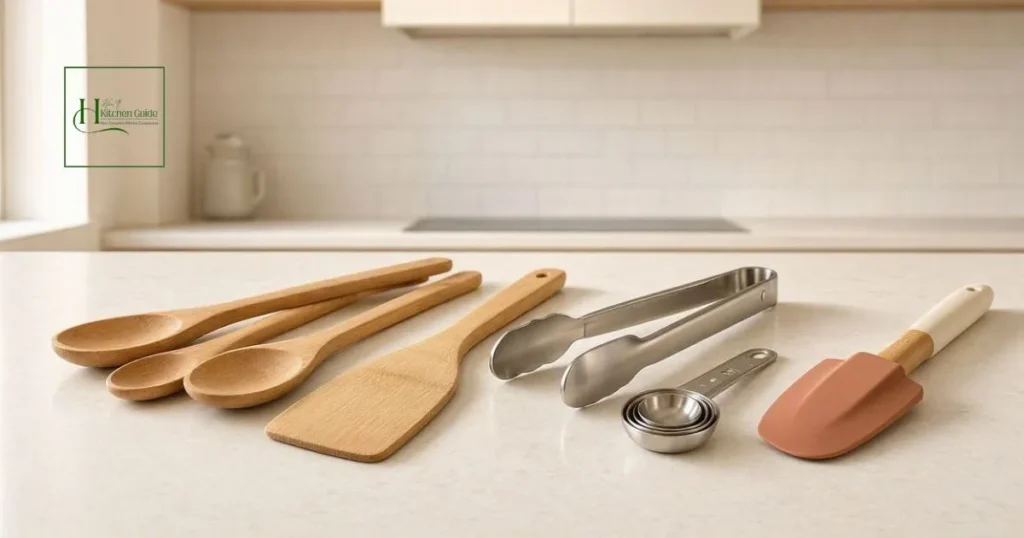
The best eco-friendly kitchen utensils are durable, reusable tools made from materials such as wood, bamboo, stainless steel, and food-grade silicone. The right choice depends on how you cook and how much maintenance you are comfortable with.
Choosing kitchen utensils is not just about how they look or how many pieces come in a set. The material, durability, maintenance, and everyday usability all matter, especially if you want to create a more eco-friendly kitchen.
The good news is that you do not need dozens of specialized tools. A few well-made utensils made from durable materials such as wood, bamboo, stainless steel, and food-grade silicone can cover most everyday cooking needs.
In this guide, we’ll look at the best eco-friendly kitchen utensils, compare popular materials, explain what to look for when buying them, and share simple care tips to help your utensils last longer.
For everyday cooking:
- Wooden spoons are practical for stirring and mixing.
- Bamboo utensils are lightweight and renewable.
- Stainless steel tongs and measuring tools are durable and easy to clean.
- Food-grade silicone spatulas are flexible and useful for scraping and mixing.
- Choosing fewer, durable utensils can also help reduce unnecessary replacements and kitchen waste.
| Material | Best For | Main Advantage | Things to Consider |
|---|---|---|---|
| Wood | Spoons, spatulas, servers | Durable and gentle on cookware | Needs proper care |
| Bamboo | Spatulas, spoons, serving tools | Lightweight and renewable | Can require careful cleaning |
| Stainless steel | Tongs, whisks, measuring tools | Strong and long-lasting | Can scratch some cookware |
| Food-grade silicone | Spatulas, turners | Flexible and cookware-friendly | Quality matters |
💡 Her Kitchen Guide Tip:
Instead of buying a large utensil set with tools you rarely use, choose a smaller collection of durable utensils that match your everyday cooking habits.
Table of Contents
What Are Eco-Friendly Kitchen Utensils?
Eco-friendly kitchen utensils are reusable cooking and serving tools made from materials that can be a more sustainable choice when compared with short-lived or disposable alternatives.
Common materials include:
- Wood
- Bamboo
- Stainless steel
- Food-grade silicone
However, “eco-friendly” does not automatically mean that a utensil is better in every situation. The material itself is only one part of the picture. Durability, product lifespan, manufacturing, maintenance, and how often the utensil needs to be replaced can also affect its environmental impact.
For this reason, buying fewer high-quality utensils and using them for a long time can be a practical approach to a more sustainable kitchen.
💡 Her Kitchen Guide Tip:
When choosing an eco-friendly utensil, look beyond the label. Check what it is actually made of, how sturdy it feels, how easy it is to clean, and whether you will use it regularly.
Why Choose Eco-Friendly Kitchen Utensils?
Choosing better kitchen utensils is not only about having an attractive or natural-looking kitchen. The right materials can also make everyday cooking more convenient while helping you avoid frequently replacing worn-out tools.
Switching to more durable and reusable kitchen utensils can have several practical benefits.
1. They Can Last Longer
Well-made stainless steel and properly maintained wooden utensils can last for years. Durable products may reduce the need for frequent replacements.
2. They Can Reduce Unnecessary Waste
Choosing reusable utensils instead of repeatedly replacing cheap, damaged tools can help reduce household waste over time.
3. They Can Be Practical for Everyday Cooking
Materials such as wood, bamboo, stainless steel, and silicone each have different strengths, making them suitable for different cooking tasks.
4. They Can Help You Build a Simpler Kitchen
You do not need every type of utensil available in a store. A carefully selected collection of versatile tools can handle most everyday cooking jobs.
💡 Her Kitchen Guide Tip:
Before buying a new utensil set, take a look at the tools you already have. Replace the pieces that are worn out or unsuitable first, rather than buying more than you actually need.
What Are the Best Materials for Eco-Friendly Kitchen Utensils?
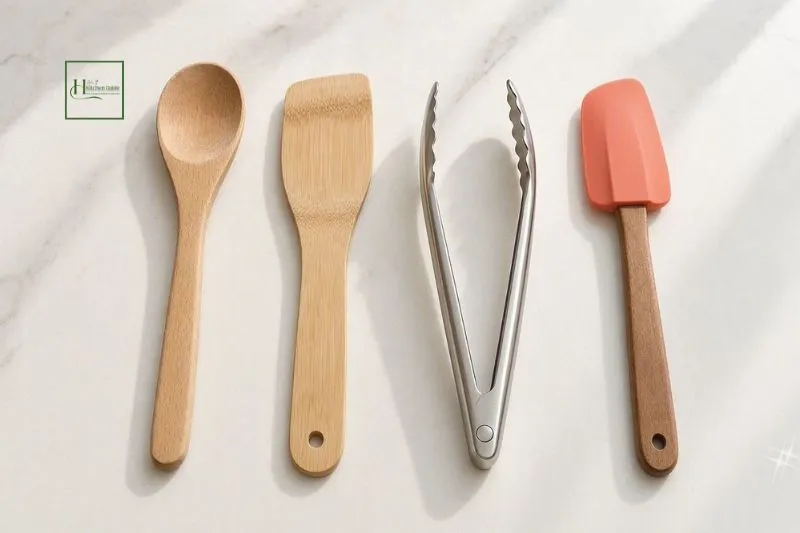
There is no single material that is perfect for every kitchen. Each option has advantages and limitations.
Here are four materials worth considering.
1. Wood
Wooden utensils are a classic choice for everyday cooking. Wooden spoons and spatulas are particularly useful for stirring soups, sauces, vegetables, and other foods.
Benefits:
- Reusable and durable when properly maintained
- Comfortable to hold
- Gentle on many cookware surfaces
- Available in a variety of wood types and designs
- Can last for a long time with proper care
Things to consider:
- Wood can absorb moisture if it is left wet for long periods.
- It requires proper cleaning and drying.
- Some wooden utensils may need occasional conditioning depending on the type of wood and manufacturer’s instructions.
💡 Her Kitchen Guide Tip:
After washing wooden utensils, dry them thoroughly instead of leaving them wet in the sink or on the counter.
2. Bamboo
Bamboo is commonly used for kitchen utensils because it is lightweight and comes from a fast-growing plant.
Bamboo spoons, spatulas, and serving utensils can be useful for everyday kitchen tasks.
Benefits:
- Lightweight
- Easy to handle
- Renewable plant-based material
- Generally gentle on cookware surfaces
- Available in many affordable designs
Things to consider:
- Quality varies between products.
- Bamboo utensils still need proper cleaning and drying.
- Avoid products made from bamboo composites or materials that contain added resins unless you understand what the product is made from and how it is intended to be used.
3. Stainless Steel
Stainless steel is one of the most durable options for kitchen utensils. It is commonly used for tongs, whisks, measuring spoons, ladles, and other cooking tools.
Benefits:
- Highly durable
- Easy to clean
- Resistant to staining
- Does not require oiling or special conditioning
- Suitable for many everyday cooking tasks
Things to consider:
- Stainless steel can scratch some cookware surfaces.
- It can become hot when used with hot food or cookware.
- For cookware with delicate coatings, check the manufacturer’s recommendations before using metal utensils.
For food-contact products, it is also sensible to choose products designed for food use and from reputable manufacturers.
If you use coated pans, you may also find our guide to non toxic nonstick cookware sets helpful when choosing utensils that are gentle on the cooking surface.
4. Food-Grade Silicone
Food-grade silicone is popular for spatulas, baking tools, tongs, and other flexible kitchen utensils.
A good silicone spatula can be especially useful for scraping bowls, mixing ingredients, and getting the last bit of batter or sauce from a container.
Benefits:
- Flexible
- Easy to clean
- Useful for baking and cooking
- Gentle on many coated cookware surfaces
- Available in many shapes and sizes
Things to consider:
- Quality can vary between products.
- Look for utensils clearly intended for food use.
- Follow the manufacturer’s temperature and care instructions.
- If a new utensil has a strong or unpleasant chemical smell, consider choosing a different product from a reputable manufacturer.
💡 Her Kitchen Guide Tip:
You don’t have to choose one material for your entire kitchen. A combination of wood, bamboo, stainless steel, and food-grade silicone can give you the right tool for different cooking tasks.
For more information about materials used in products that come into contact with food, you can refer to the U.S. Food & Drug Administration’s Food Ingredients & Packaging information.
| Material | Best for | Main advantage | Things to consider |
|---|---|---|---|
| Wood | Spoons, stirrers and serving tools | Comfortable to hold and gentle on many cookware surfaces | Needs prompt washing and thorough drying |
| Bamboo | Spatulas, spoons and serving tools | Lightweight and made from a fast growing plant | Quality, finish and construction vary |
| Stainless steel | Tongs, whisks, ladles and measuring tools | Strong, durable and easy to clean | May scratch delicate or coated cookware |
| Silicone | Spatulas, scrapers and turners | Flexible and gentle on many pan surfaces | Check food contact labeling and temperature instructions |
Is Wood a Good Material for Kitchen Utensils?
Yes, wood can be an excellent choice for cooking utensils, especially spoons and tools used with cookware that can be scratched easily. Wooden utensils are durable when properly maintained and do not conduct heat as quickly as metal.
If you are also choosing a prep surface, compare the best cutting board material for everyday chopping and food preparation.
Best Uses for Wooden Utensils
- Cooking spoons
- Stirring utensils
- Salad servers
- Wooden spatulas
- Serving tools
Things to Consider
Wooden utensils should be cleaned and dried properly. They generally need more care than stainless steel, and prolonged soaking can shorten their useful life.
💡 Her Kitchen Guide Tip:
Avoid leaving wooden utensils soaking in the sink for long periods. Wash them after use and allow them to dry completely.
Is Bamboo a Good Choice for Eco-Friendly Kitchen Utensils?
Bamboo is a popular choice for kitchen utensils because it is lightweight and commonly used for spoons, spatulas, and serving tools. It can be a practical option for everyday kitchens when the utensil is well made and properly maintained.
Best Uses for Bamboo Utensils
- Spatulas
- Cooking spoons
- Serving spoons
- Salad servers
- Utensil sets
Before buying, check the construction and finish rather than assuming that every bamboo product has the same quality.
💡 Her Kitchen Guide Tip:
If you’re buying a bamboo utensil set, check whether the pieces feel sturdy and smooth rather than choosing purely on appearance.
Is Stainless Steel Safe for Cooking Utensils?
Stainless steel is widely used for kitchen utensils because it is strong, durable, and easy to clean. It is particularly useful for utensils such as tongs, whisks, measuring spoons, and other tools where strength is important.
Best Uses for Stainless Steel
- Tongs
- Whisks
- Measuring cups
- Measuring spoons
- Serving spoons
One thing to consider is your cookware. Metal utensils may not be suitable for every non-stick or delicate coated surface.
💡 Her Kitchen Guide Tip:
If you use non-stick cookware, check the manufacturer’s instructions before using stainless steel utensils. When in doubt, choose a utensil designed to be gentle on coated surfaces.
Is Food-Grade Silicone Good for Kitchen Utensils?
Food-grade silicone can be a useful choice for flexible kitchen utensils such as spatulas and turners, particularly when you want a tool that is gentle on cookware. Quality matters, so look for products clearly labeled as food-grade silicone rather than choosing based only on appearance or price.
Best Uses for Silicone Utensils
- Spatulas
- Turners
- Scrapers
- Baking tools
- Flexible cooking utensils
💡 Her Kitchen Guide Tip:
For silicone utensils, pay attention to the quality of the material and construction. A well-made utensil should feel sturdy rather than overly flimsy.
Best Eco-Friendly Kitchen Utensils for Everyday Cooking
Best Eco-Friendly Kitchen Utensils for Everyday Cooking
You don’t need a large collection of kitchen tools to cook comfortably. A few well-chosen utensils can handle most everyday tasks, from stirring curries and flipping food to measuring ingredients and serving salads.
When choosing the best eco-friendly kitchen utensils, focus on the material, durability, comfort, and whether the utensil is suitable for your cookware. The following options are practical additions to most kitchens.
1. Wooden Cooking Spoon
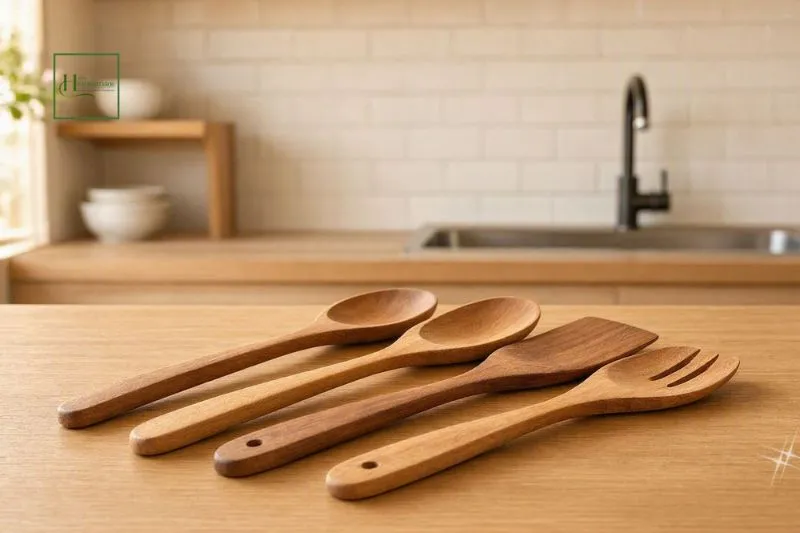
A wooden cooking spoon is a kitchen basic that can be used for stirring soups, sauces, curries, vegetables, and other dishes. Its smooth surface is also a good choice when you want to avoid using hard metal utensils on delicate cookware.
Why it’s worth having:
- Comfortable to hold during cooking
- Useful for stirring and mixing
- Durable with proper care
- Gentle on many cookware surfaces
- Suitable for everyday cooking
Best for: Soups, curries, sauces, vegetables, and general stirring.
Keep in mind: Wooden utensils should be washed and dried properly. Avoid leaving them submerged in water for long periods.
💡 Her Kitchen Guide Tip:
Keep your wooden cooking spoon dry between uses and avoid putting it in the dishwasher unless the manufacturer specifically says it is dishwasher-safe.
2. Bamboo Spatula
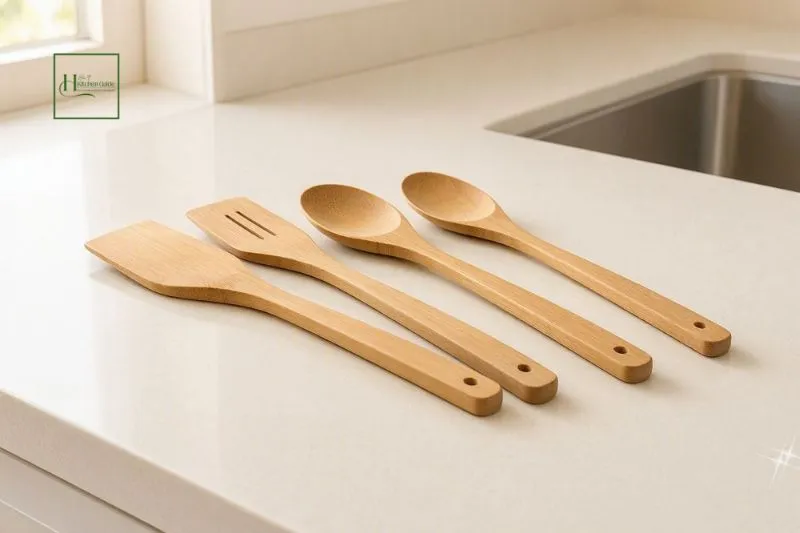
A bamboo spatula is a lightweight option for stirring, turning, and serving food. It can be especially useful for everyday cooking when you prefer a natural material over conventional plastic utensils.
Bamboo spatulas come in different shapes and finishes, so look for one that feels sturdy and has a smooth surface.
Why it’s worth having:
- Lightweight and easy to handle
- Useful for stirring and flipping
- Simple to store
- Comfortable for regular cooking
- Available in many affordable options
Best for: Stir-fries, vegetables, pancakes, eggs, and general stovetop cooking.
Keep in mind: Bamboo can require careful cleaning and drying to maintain its condition.ying.
💡 Her Kitchen Guide Tip:
Look for a smooth, sturdy bamboo spatula without rough edges or cracks. A well-finished utensil is more comfortable to use and easier to maintain.
3. Stainless Steel Tongs
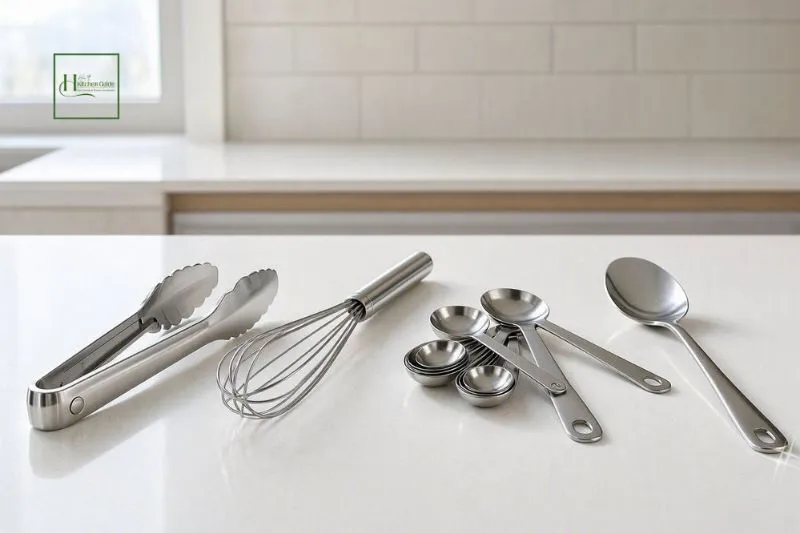
Stainless steel tongs are one of the most useful tools for handling food without getting too close to a hot pan. They can be used for turning vegetables, serving pasta, picking up grilled foods, and handling larger pieces of food.
Unlike lightweight utensils that may bend or break easily, a good pair of stainless steel tongs can withstand frequent use.
Why it’s worth having:
- Strong and durable
- Easy to wash
- Useful for cooking and serving
- Suitable for frequent use
- Doesn’t require special maintenance
Best for: Grilling, frying, roasting, serving pasta, and handling vegetables.
Keep in mind: Bare stainless steel can scratch some coated cookware, so check your cookware manufacturer’s recommendations before using metal utensils.s.
💡 Her Kitchen Guide Tip:
Choose tongs with a comfortable locking mechanism and a firm grip. A good pair should open and close smoothly without feeling flimsy.
4. Food-Grade Silicone Spatula
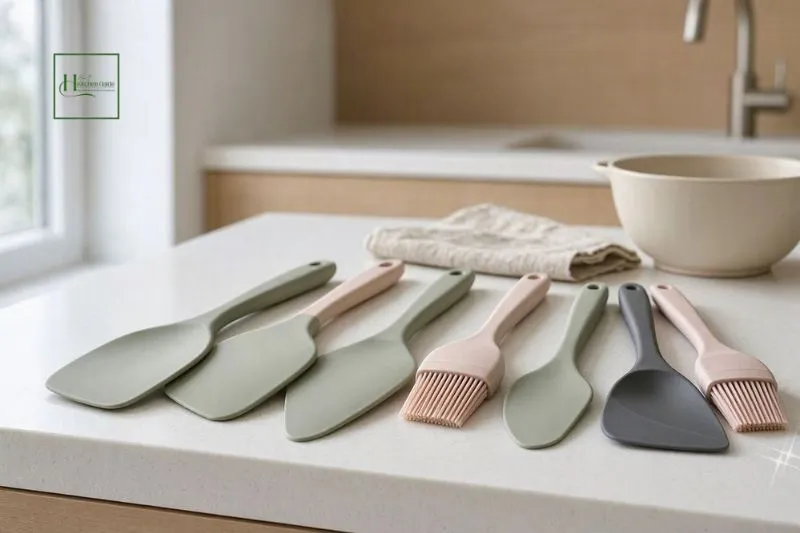
A food-grade silicone spatula is a versatile tool for cooking and baking. Its flexible edge makes it useful for scraping bowls, mixing ingredients, and turning food.
It can also be a practical choice when you use cookware that requires gentler utensils.
Why it’s worth having:
- Flexible and easy to handle
- Useful for cooking and baking
- Helps scrape bowls and containers
- Gentle on many cookware surfaces
- Easy to clean
Best for: Baking, sauces, scrambled eggs, pancakes, and scraping bowls.
Keep in mind: Look for clearly labeled food-grade silicone and good overall construction. Very cheap, poorly made utensils may not offer the same durability as better-quality options.nt. Look for utensils clearly identified as food-grade silicone and avoid products that feel poorly made or have an unusually strong chemical smell.
💡 Her Kitchen Guide Tip:
If you use non-stick cookware, a quality silicone spatula can be a useful everyday tool because its flexible edge can help reduce unnecessary scratching.
5. Stainless Steel Measuring Cups and Spoons
Accurate measurements can make a big difference when you’re baking or following a new recipe. Stainless steel measuring cups and spoons are a durable option that can be used repeatedly without the same concerns about wear and breakage associated with some lower-quality materials.
Why they’re worth having:
- Durable and reusable
- Easy to clean
- Useful for cooking and baking
- Clearly marked measurements
- Suitable for frequent use
Best for: Flour, sugar, spices, liquids, and other measured ingredients.
💡 Her Kitchen Guide Tip:
If you cook or bake regularly, choose a complete measuring set with clearly marked measurements. It is more practical than buying individual pieces that are easy to lose.
6. Wooden Salad Servers
Wooden salad servers are simple but useful tools for serving salads, vegetables, and other dishes. They can also add a natural touch to your dining table without taking up much storage space.
Why they’re worth having:
- Lightweight
- Reusable
- Comfortable to hold
- Useful for serving
- Easy to store
Best for: Salads, vegetables, and serving dishes at the table.
Keep in mind: Like other wooden utensils, salad servers should be cleaned and dried properly to keep them in good condition.
💡 Her Kitchen Guide Tip:
Keep wooden serving tools separate from heavily stained or strongly flavored foods when possible, as wood can absorb colors and odors over time.
Quick Comparison: Which Eco-Friendly Utensil Is Best for You?
| Utensil | Best For | Material | Main Benefit |
| Wooden cooking spoon | Stirring and cooking | Wood | Gentle and durable |
| Bamboo spatula | Stirring and flipping | Bamboo | Lightweight |
| Stainless steel tongs | Gripping and serving | Stainless steel | Strong and long-lasting |
| Silicone spatula | Cooking and scraping | Food-grade silicone | Flexible |
| Measuring cups & spoons | Cooking and baking | Stainless steel | Durable and reusable |
| Wooden salad servers | Serving salads | Wood | Lightweight and reusable |
No material is automatically the best choice for every kitchen. Your cooking style, cookware, cleaning habits, and how long you expect the utensil to last should all be considered.
💡 Her Kitchen Guide Tip:
Don’t need every utensil on this list. Start with the tools you use most often, then add others as your cooking needs grow.
Materials to Be Careful With When Choosing Kitchen Utensils
Not every utensil marketed as “eco-friendly” is automatically a better choice. The material, quality, construction, and expected lifespan all matter. A product may look sustainable on the outside but still be poorly made or unsuitable for regular cooking.
If you want to learn more about food contact materials, the European Food Safety Authority overview explains how materials such as plastics, metals and other substances are assessed for food contact use.
Here are a few things to consider before adding a utensil to your kitchen.
Black Plastic Utensils
Replace plastic utensils that are cracked, melted, deeply scratched or deteriorating. When buying a new utensil, choose products with clear material information and instructions showing that they are intended for food contact use.
Do not assume that every black plastic utensil is unsafe. The most practical approach is to avoid poorly labeled products, replace damaged tools and choose reputable manufacturers.
Bamboo Composite Products
Not every product marketed as “bamboo” is simply bamboo.
Some products may combine bamboo fibers with other materials or resins. This is different from a simple bamboo utensil.
Check the product’s material information before buying, especially if you are specifically looking for a simple plant-based utensil.
Very Cheap or Poorly Labeled Products
Price alone does not determine quality, but extremely cheap products with unclear material information can make it difficult to know what you are buying.
When possible, choose utensils with:
- Clear material information
- Food-use labeling
- Manufacturer details
- Care instructions
- Appropriate temperature information for heat-resistant products
For additional information about food-contact materials and safety considerations, see the European Commission’s Food Contact Materials guidance.
Mixed Materials With Unclear Construction
Some kitchen tools combine several materials, such as silicone, plastic, metal, or wood. Mixed-material construction is not necessarily a problem, but it can make durability and care more complicated.
If the product does not clearly explain its materials or care instructions, it may be better to choose a simpler, well-documented option.
💡 Her Kitchen Guide Tip:
Don’t choose a utensil simply because the packaging says “green,” “natural,” or “eco-friendly.” Check the actual material and construction before making your decision.
How to Choose the Best Eco-Friendly Kitchen Utensils
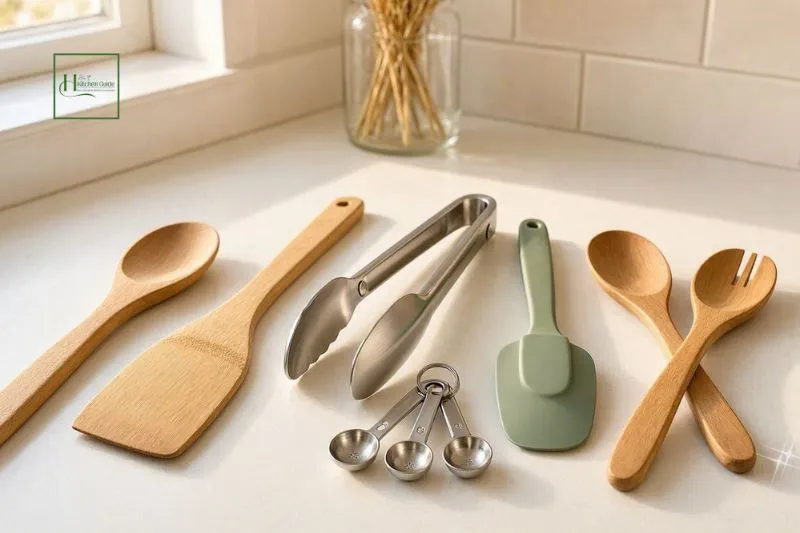
Choosing kitchen utensils becomes much easier when you know what to look for. Instead of focusing only on appearance or price, consider how the tool will perform in your kitchen over time.
1. Check the Material
Start by finding out exactly what the utensil is made from. Wood, bamboo, stainless steel, and food-grade silicone can all be useful, but each has different care and usage requirements.
2. Consider Durability
A utensil that lasts longer can be a more practical choice than one that needs frequent replacement. Look for sturdy handles, smooth finishes, strong joints, and good overall construction.
3. Think About Your Cookware
Your cookware should influence your utensil choices.
For example, if you regularly use non-stick cookware, you may prefer wooden or suitable silicone utensils rather than hard metal tools that could scratch the cooking surface.
4. Check Cleaning Requirements
Consider how much maintenance you are willing to do.
Stainless steel is generally easy to clean, while wood and bamboo need more attention to washing and drying. Choose materials that fit naturally into your daily routine.
5. Look for Clear Product Information
A good product description should tell you important details such as:
- Material
- Intended use
- Heat resistance where applicable
- Cleaning instructions
- Dishwasher suitability
- Cookware compatibility
Clear information makes it easier to compare products and avoid unsuitable purchases.
6. Consider Value, Not Just Price
The cheapest utensil isn’t always the best value, and the most expensive one isn’t automatically the best either.
Think about how often you’ll use it, how long it is likely to last, and whether it actually solves a problem in your kitchen.
💡 Her Kitchen Guide Tip:
Before buying a new utensil, ask yourself one simple question: “Will I actually use this regularly?” If the answer is no, you may not need it, even if it looks useful in the store.
How to Care for Wood and Bamboo Utensils
Proper care can help wooden and bamboo utensils stay useful for longer.
Wash Them Promptly
Do not leave wooden or bamboo utensils soaking in water for long periods.
Wash them after use and remove food residue before it dries.
Dry Them Thoroughly
Allow utensils to dry completely before storing them.
Avoid storing damp wooden or bamboo tools in closed containers where moisture can remain trapped.
Avoid Unnecessary Heat
Follow the manufacturer’s instructions and avoid exposing wooden or bamboo utensils to excessive heat.
Check for Damage
Inspect your utensils occasionally.
Replace them if they develop:
- Deep cracks
- Splits
- Severe roughness
- Burn damage
- Signs of deterioration
Good care is one of the simplest ways to extend the useful life of reusable kitchen utensils.
For more practical ways to keep kitchen tools and food preparation surfaces clean, read our natural kitchen cleaning hacks for busy homemakers.
A Simple Eco-Friendly Kitchen Utensil Buying Checklist
Before purchasing your next kitchen utensil, run through this quick checklist:
☐ Is the material clearly identified?
☐ Is the utensil sturdy and well made?
☐ Will it work with my cookware?
☐ Is it suitable for the type of cooking I do?
☐ Is it easy enough for me to clean and maintain?
☐ Does it have clear care instructions?
☐ Will I use it regularly?
☐ Is the price reasonable for its expected lifespan?
A simple checklist like this can help you avoid buying unnecessary kitchen tools and focus on utensils that genuinely add value to your kitchen.
Keeping your utensils in a dry, easy to reach space can also help them last longer. These pantry organization ideas for small kitchens may help you create a more practical storage system.
💡 Her Kitchen Guide Tip:
Give wooden and bamboo utensils their own space in your kitchen drawer or utensil holder so they can stay dry and aren’t constantly pressed against wet tools.
FAQs About Eco-Friendly Kitchen Utensils
Q: What is the healthiest material for kitchen utensils?
A: There is no single material that is best for every person or cooking situation. Wood, bamboo, stainless steel, and food-grade silicone can all be practical choices when they are designed for food use and properly maintained.
Q: What kitchen utensils do not release microplastics?
A: Utensils made from materials such as stainless steel and untreated wood do not contain plastic in the same way that plastic utensils do. However, material safety and environmental impact are broader topics than microplastics alone.
Q: Are wooden utensils better than plastic utensils?
A: Wooden utensils can be a durable and practical alternative to plastic for many cooking tasks. However, their environmental advantage depends on factors such as sourcing, manufacturing, durability, and how long the utensil is used.
Q: Is stainless steel safe for cooking?
A: Stainless steel is widely used for food preparation and cooking utensils. Choose products intended for food use and follow the manufacturer’s care instructions.
Q: Are silicone utensils safe to use?
A: Food-grade silicone utensils are commonly used for cooking and baking. Choose products intended for food use and follow the manufacturer’s temperature and care instructions.
Q: Which is better, silicone or bamboo utensils?
A: It depends on the task. Bamboo is lightweight and plant-based, while silicone is flexible and especially useful for spatulas and baking tools. Consider your cookware and cooking habits before choosing.
Q: What should I replace my plastic utensils with?
A: You can consider replacing worn or damaged plastic utensils with wood, bamboo, stainless steel, or food-grade silicone, depending on the cooking task.
Q: Are bamboo utensils eco-friendly?
A: Bamboo can be a renewable material, but the overall environmental impact of a product also depends on how it is manufactured, transported, used, and eventually disposed of. Choose durable products and check the material information carefully.
Q: How do I make wooden kitchen utensils last longer?
A: Wash wooden utensils promptly, avoid prolonged soaking, dry them thoroughly, and follow the manufacturer’s care recommendations. Replace them if they develop deep cracks, splits, or other significant damage.
Q: How many kitchen utensils do I really need?
A: There is no fixed number. Most home cooks can start with a small collection of versatile tools such as a cooking spoon, spatula, tongs, whisk, and measuring tools, then add utensils based on their cooking needs.
Q: What should I look for when buying non-toxic and eco-friendly kitchen utensils?
A: Look for clearly identified materials, durable construction, appropriate food-use labeling, suitable cookware compatibility, and clear cleaning instructions. Also consider whether the utensil is something you will actually use regularly.
Q: Are eco-friendly kitchen utensils expensive?
A: Not necessarily. Eco-friendly utensils are available at different price points. Instead of focusing only on the initial price, consider the quality, durability, and how often the utensil may need to be replaced. A well-made utensil can offer better long-term value.
Final Thoughts
Choosing eco-friendly kitchen utensils does not mean replacing everything in your kitchen at once.
A better approach is to choose durable, reusable utensils that you will actually use and maintain for a long time. Wood, bamboo, stainless steel, and food-grade silicone can each have a useful place in an everyday kitchen.
Instead of focusing only on whether a product is labeled “eco-friendly,” look at the material, quality, durability, intended use, maintenance requirements, and product information before buying.
A smaller collection of reliable utensils can be more useful than a crowded drawer full of tools you rarely use.
💡 Her Kitchen Guide Tip:
Start with the utensils you reach for every day. Replace worn-out tools gradually with durable alternatives rather than buying an entirely new collection at once.
More Kitchen Essentials
If you’re building a practical and well-organized kitchen, you may also find these guides helpful:
- Must-Have Kitchen Utensils
- Best Cutting Board Material
- Best Non-Toxic Non-Stick Cookware Sets
- Pantry Organization Ideas for Small Kitchens
- Kitchen Countertop Organization Ideas
📌 Save this guide on Pinterest for easy reference when you are choosing durable kitchen utensils.
📘 Follow Her Kitchen Guide on Facebook for practical kitchen tips, easy recipes and simple organization ideas.
📷 Follow Her Kitchen Guide on Instagram for quick kitchen inspiration, behind-the-scenes tips, and everyday organization ideas.
Explore More Kitchen Guides
Looking for more practical kitchen tips, appliance buying guides, and easy recipes? Browse our latest articles and discover more helpful kitchen guides.