⭐ How to organize a stress-free kitchen for large family gatherings?
To make your kitchen stress-free for family gatherings and special occasions, start by planning a realistic menu, preparing ingredients in advance, clearing your counters, organizing cooking and serving essentials, and creating a simple schedule. This helps you spend less time managing kitchen chaos and more time enjoying your guests.
Have you ever invited family over and felt excited about the gathering—only to find yourself stuck in the kitchen for most of the day?
There is always something to do: vegetables to chop, dishes to cook, serving plates to find, drinks to chill, and a sink that somehow fills up faster than you can clear it. By the time the guests arrive, you may already feel too tired to enjoy the occasion.
The good news is that a stress-free kitchen is not about having a huge kitchen, expensive appliances, or a perfectly organized home. It is mostly about preparing the right things at the right time.
Whether you are hosting an Eid gathering, Rabi-ul-Awwal get-together, family dawat, birthday, dinner party, or another special occasion, a little planning can make cooking and hosting much easier.
Here is how to prepare your kitchen so you can spend less time dealing with last-minute kitchen chaos—and more time with the people you invited.
One of the easiest ways to make your kitchen stressful is to plan more food than you can comfortably prepare.
When guests are coming, it can be tempting to make several main dishes, multiple side dishes, different desserts, snacks, and drinks. But more dishes also mean more chopping, cooking, serving dishes, dirty utensils, and cleanup.
Instead, think about what your guests will actually enjoy and choose a simple, manageable menu.
For example, a family gathering could include:
- One main dish
- One rice or bread option
- One side or salad
- One dessert
- One or two drinks
For an Eid gathering or Rabi-ul-Awwal get-together, you can add a traditional sweet or sharbat without turning the entire day into a cooking marathon.
⭐My tip: Before adding another dish to your menu, ask yourself: Do I really need it, and can I prepare it without making the rest of the day stressful?
A smaller menu you can prepare confidently is often much better than a huge menu that keeps you in the kitchen while everyone else enjoys themselves.
2. Prepare Your Kitchen Before the Gathering
A little kitchen preparation can save you from a lot of last-minute stress. You do not need to deep-clean every corner of your kitchen before guests arrive. Instead, focus on the areas you will actually use for cooking and serving.
Start with your countertops, sink, stove, refrigerator and main preparation area. Remove appliances, containers and utensils that you will not need that day. This gives you more working space and makes it easier to move between different cooking tasks.
Clear Your Counters and Sink
Try to keep at least one section of your counter completely clear. You may need it for chopping vegetables, assembling dishes, cooling food or placing serving platters.
An empty sink is equally helpful. If you start cooking with a sink already full of dishes, the mess can quickly become overwhelming.
⭐Personal Tip: I find that starting with an empty sink makes a bigger difference than trying to keep the whole kitchen spotless. You have somewhere to put dirty utensils as you work, and the kitchen feels much more manageable.
Check Your Refrigerator and Pantry
Before shopping for the gathering, quickly check what you already have at home.
Look for:
- Basic spices and seasonings
- Cooking oil and ghee
- Flour, rice and other staples
- Sauces and condiments
- Drinks and dessert ingredients
- Food storage containers
This simple check can prevent unnecessary shopping and help you notice anything that needs to be used before it expires.
If you are hosting a family gathering or special occasion, also make some refrigerator space available for prepared food, drinks and leftovers.
If your pantry often feels crowded, see our guide to Pantry Organization for simple ways to make everyday ingredients easier to find.
Take Out the Essentials Before You Start Cooking
Do not wait until you are halfway through cooking to discover that your large serving spoon, blender, baking dish or extra pan is somewhere at the back of a cabinet.
Take out the main cookware, utensils and serving dishes you expect to use and keep them somewhere accessible.
If you’re not sure which tools are worth keeping within easy reach, see my guide to must-have kitchen utensils for every home cook.
This small step can save several unnecessary trips across the kitchen when you are already busy.
3. Prepare Your Ingredients Ahead of Time
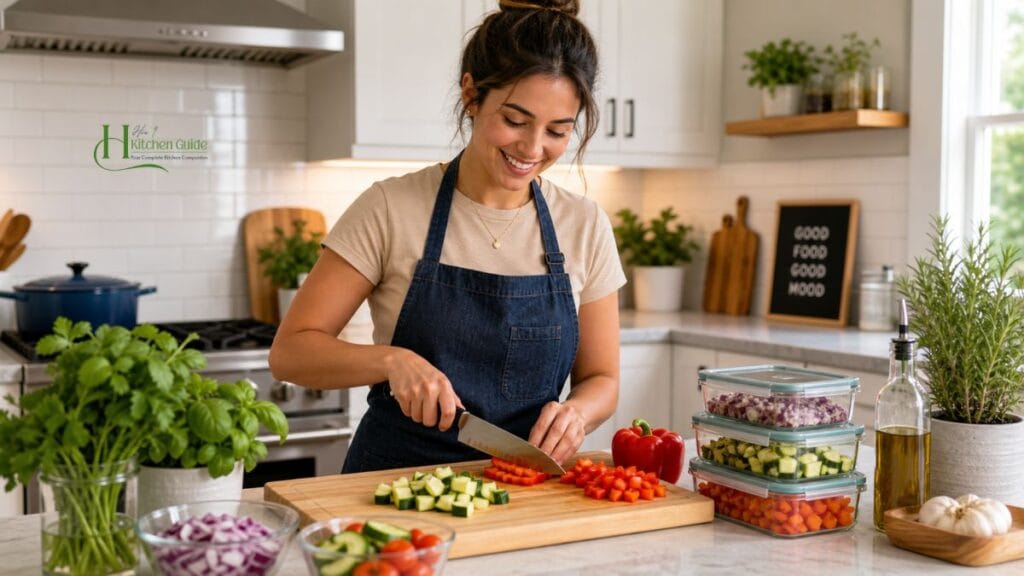
One of the best ways to create a stress-free kitchen is to avoid doing every task on the day of the gathering.
Once your menu is finalized, look at each dish and ask yourself: What can I prepare in advance?
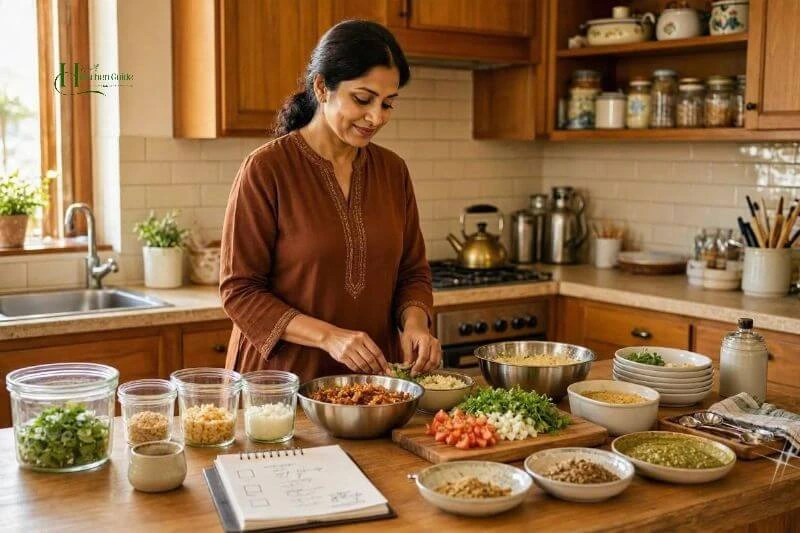
You may be able to wash and chop vegetables, marinate meat, prepare sauces or chutneys, make desserts, or measure dry ingredients a day earlier. For example, freezer-friendly foods such as homemade Chicken Shami Kababs can be prepared ahead of time and cooked when needed, making them a convenient option for busy gatherings. Even small preparations can make a noticeable difference when several dishes need to come together at the same time.
Make a Simple Prep List
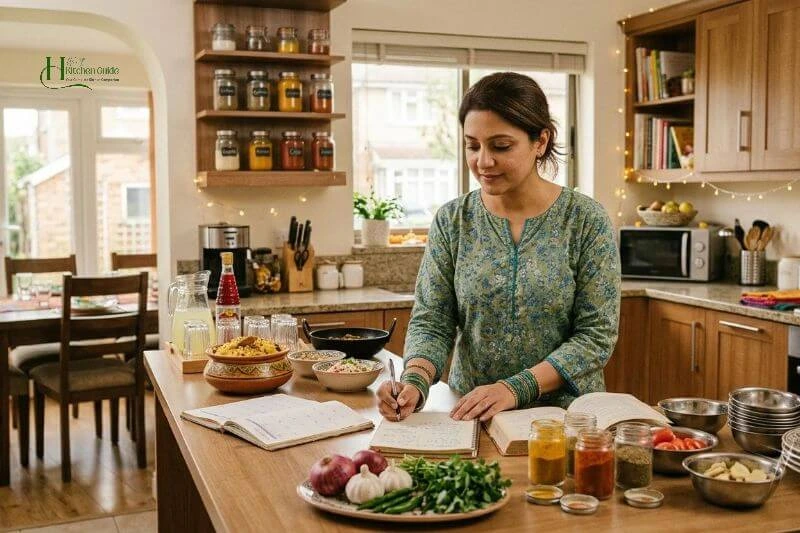
Instead of keeping everything in your head, write down the tasks that can be completed ahead of time.
For example:
- Wash and chop vegetables
- Marinate chicken or meat
- Prepare chutneys and sauces
- Measure spices and dry ingredients
- Prepare dessert
- Chill drinks
- Set aside serving dishes
Crossing these small tasks off your list before the guests arrive can make the actual cooking feel much more manageable.
Label and Store Prepared Ingredients
If you prepare several things in advance, store them properly in clean, covered containers and label them when necessary. For safe handling and storage of prepared foods and leftovers, see the USDA food safety guidelines. This saves you from opening multiple containers and trying to remember what is inside each one.
For example, if you are preparing ingredients for a family dawat, you can keep chopped vegetables, marinated meat and prepared sauces separately so everything is ready when you need it.
⭐Personal Tip: Don’t try to prepare everything a day before. The goal is to make the gathering easier, not to create another exhausting preparation day. Choose the tasks that will genuinely save you time later.
4. Create a Simple Cooking Schedule
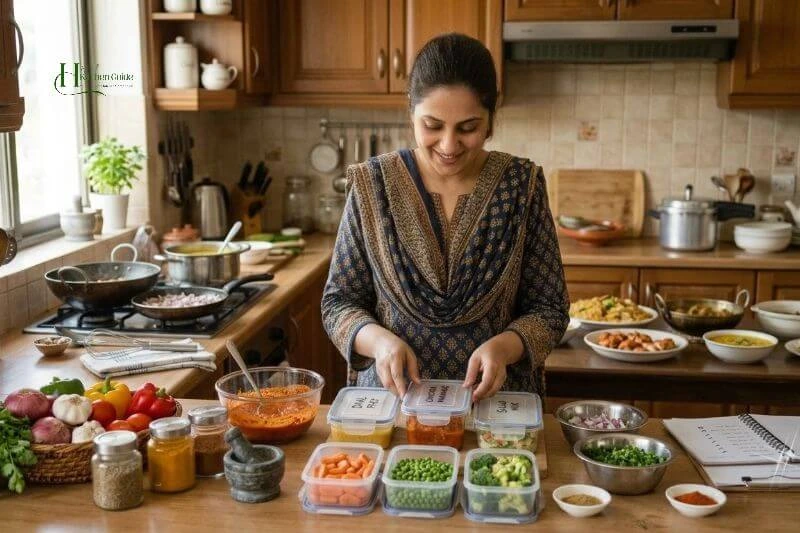
Even a well-planned menu can become stressful when several dishes need attention at the same time.
A simple cooking schedule helps you decide what to cook first, what can wait, and what needs to be served fresh.
Start with dishes that take the longest or can be prepared completely ahead of time. Leave quick-cooking items and foods that are best served fresh for later.
For example:
Earlier:
Prepare desserts, sauces, marinades and other make-ahead items.
A few hours before guests arrive:
Cook dishes that can be reheated without losing their quality.
Closer to serving time:
Prepare salads, drinks and other fresh items.
This doesn’t need to be a strict timetable. Think of it as a simple roadmap that keeps you from trying to do everything at once.
5. Set Up Your Kitchen for Easy Cooking and Serving
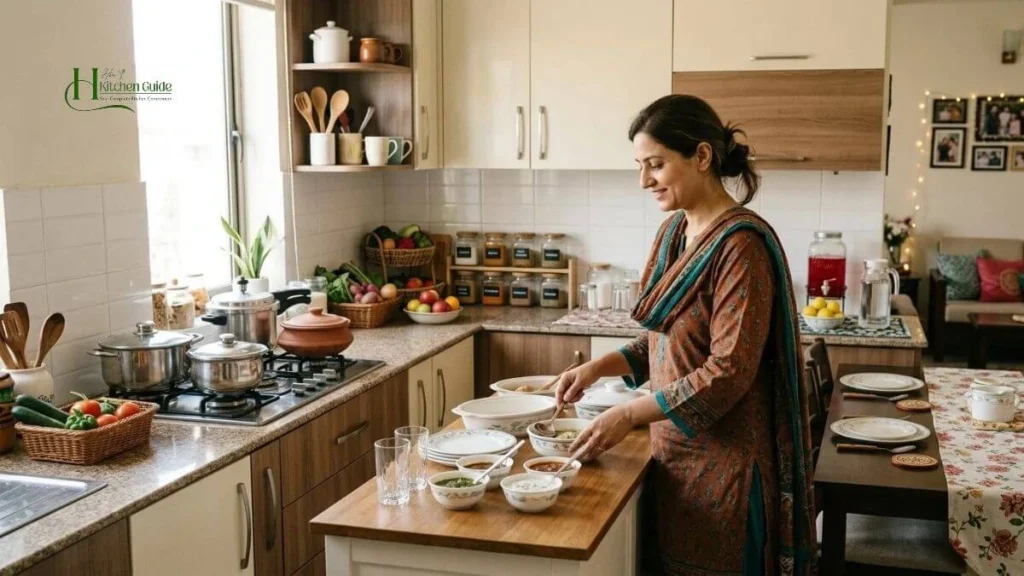
Once your ingredients are ready, think about how you will actually move around the kitchen while cooking. A little organization can prevent you from constantly opening cabinets, searching for utensils, or moving things around to make space.
Keep the tools you use most often within easy reach. Your best cutting board, knives, cooking spoons, measuring tools, and frequently used spices should be easy to access.
At the same time, try not to overcrowd your counters. Leave enough space for preparing food, placing hot dishes temporarily and assembling plates.
Keep Cooking and Serving Areas Separate
If possible, create a small area for serving dishes away from the busiest part of the stove.
Put your serving platters, bowls, spoons and other essentials together so you are not searching for them when the food is ready.
This becomes especially helpful when you are preparing several dishes for a family gathering or special occasion.
Prepare Your Serving Dishes in Advance
Before you start cooking, take a quick look at the menu and decide which platter or bowl each dish will go into.
It may sound like a tiny task, but it can save you from the classic last-minute situation of having perfectly cooked food ready and then realizing that the right serving dish is still buried somewhere in the cabinet.
If you are hosting an Eid dinner, Rabi-ul-Awwal gathering, or family dawat, you can even place the serving dishes together a few hours before guests arrive.
⭐Personal Tip: I would rather spend five minutes deciding where everything will go beforehand than spend those same five minutes rushing around the kitchen when everyone is waiting for dinner.
Make Drinks Easy to Reach
Drinks can create unnecessary traffic in the kitchen, especially when several guests are helping themselves.
If space allows, create a simple drinks area with:
- Glasses
- Water
- Sharbat or other drinks
- Ice
- Napkins
This keeps guests away from the stove and gives you a little more room to focus on cooking.
6. Keep Your Kitchen Manageable While Cooking
Even with good preparation, the kitchen can become messy once cooking starts. The trick is not to keep everything perfectly clean—it is to stop the mess from getting out of control.
As you finish using an ingredient, put it back where it belongs. Rinse utensils that you will need again, wipe small spills as you go, and avoid letting empty containers and wrappers pile up on the counter.
Use the Clean-as-You-Go Method
Instead of leaving every bowl, spoon and cutting board until the end, clean a few things while food is cooking.
For example, while a dish is simmering, you can:
- Wash the utensils you have finished using
- Put ingredients back in the pantry or refrigerator
- Wipe the preparation area
- Empty food scraps
- Clear unnecessary dishes from the counter
You do not have to stop cooking every few minutes. Simply use the small gaps in your cooking schedule to reset your workspace.
Avoid Doing Too Many Things at Once
Trying to chop vegetables, answer the door, check something in the oven and prepare drinks at the same time is a quick way to turn a stress-free kitchen into a stressful one.
Whenever possible, finish one major cooking task before starting another. Keep your cooking schedule nearby so you know what needs your attention next.
And if family members are around, let them help. Someone can arrange the table, fill glasses, bring serving dishes or keep an eye on a simple task while you concentrate on cooking.
⭐Personal Tip: Don’t feel that hosting means you have to do everything yourself. Delegating two or three small jobs can make a surprisingly big difference.
Keep Hot and Busy Areas Clear
Pay extra attention to the area around your stove and oven. Keep unnecessary utensils, packaging and other items away from hot surfaces.
This gives you more working space and also makes it easier to move hot cookware safely when several dishes are being prepared.
A kitchen that is organized enough to work comfortably is far more useful than one that simply looks perfectly tidy.
7. Make Your Kitchen Guest-Friendly
When family and friends come over, your kitchen does not have to be completely off-limits. In fact, making a few things easy to access can make the whole gathering feel more relaxed.
If guests need water, glasses, napkins or serving spoons, they should not have to ask you every few minutes or search through your cabinets.
Keep Everyday Essentials Accessible
Place commonly needed items where they are easy to find, such as:
- Drinking glasses
- Water
- Napkins and tissues
- Serving spoons
- Plates and bowls
- Tea or coffee essentials
This is particularly useful when you are hosting a larger family gathering or special occasion.
Create a Small Self-Serve Area
If your kitchen or dining area allows, set up a small self-serve station for drinks or simple snacks.
For example, you could keep water, sharbat, glasses and napkins together. Guests can help themselves while you continue preparing the meal.
For an Eid gathering, Rabi-ul-Awwal get-together, or family dawat, this simple setup can reduce unnecessary interruptions and help you stay focused on the kitchen.
Think About the Kitchen Traffic
Try to keep the busiest areas of your kitchen clear. If several people are moving between the kitchen, dining area and refrigerator, even a small amount of clutter can make the space feel chaotic.
Before guests arrive, think about where people are most likely to walk and keep those paths as clear as possible.
You don’t need a designer kitchen to host comfortably. Good organization and a little advance preparation can make an ordinary kitchen work much better for entertaining.
A stress-free gathering does not require a table full of complicated dishes. In fact, one of the easiest ways to reduce kitchen stress is to choose a menu that you can realistically prepare.
Before deciding what to cook, think about how much time you have, how many people you are serving, and how much cooking your kitchen can comfortably handle.
Choose a Mix of Make-Ahead and Fresh Dishes
Try not to choose dishes that all need to be prepared at the last minute.
A better approach is to combine:
- One or two main dishes that can be prepared ahead
- A simple side dish or salad
- A snack or appetizer
- A dessert that can be made earlier
- A simple drink such as lemonade, sharbat or iced tea
This gives you variety without putting every dish on your cooking schedule at the same time.
Keep the Menu Realistic
It is tempting to prepare a long menu when you are expecting guests, especially for Eid, Rabi-ul-Awwal gatherings, family dinners or other special occasions.
But more dishes do not necessarily mean a better gathering.
Choose a few dishes that your family genuinely enjoys and that you know you can prepare confidently. If one dish requires hours of preparation, consider whether it is worth adding to an already busy menu.
⭐Personal Tip: When I am planning food for guests, I would rather serve a few well-prepared dishes and actually have time to sit with everyone than spend the entire gathering standing beside the stove.
Consider Your Cooking Equipment
Your kitchen appliances can also affect your cooking schedule. If you’re planning to use smaller appliances alongside your main cooking setup, you may also find these easy air fryer recipes for beginners useful for quick side dishes and snacks. If you need the oven for two dishes at the same time or your stovetop is already full, you may end up creating unnecessary delays.
Before finalizing the menu, check:
- How many burners you will need
- Whether your oven is required
- Which dishes can be prepared without cooking
- Whether anything can be cooked or reheated in advance
- Which appliances will be used at the same time
A little planning here can prevent the last-minute kitchen rush that often happens before guests arrive.
9. Prepare a Few Things the Day Before
One of the easiest ways to make a stress-free kitchen for family gatherings is to avoid leaving everything for the same day.
You do not have to cook the entire meal in advance. Instead, look for small tasks that you can finish a day earlier.
Make a Simple Prep List
Depending on your menu, you may be able to:
- Chop and store vegetables
- Marinate meat or chicken
- Prepare sauces or dressings
- Make desserts
- Wash and dry salad ingredients
- Set out serving dishes
- Check that you have enough plates, glasses and cutlery
- Move frozen ingredients to the refrigerator when appropriate
Keep your list realistic. The purpose of preparing ahead is to reduce your workload, not create another long list of chores.
Set the Table and Serving Items Early
If you are having a formal family dinner or special occasion, arrange your table and serving essentials before the cooking rush begins.
Place plates, cutlery, glasses, napkins and serving dishes where they will be needed.
For an Eid gathering or Rabi-ul-Awwal family gathering, this can be particularly helpful because you may have several dishes, drinks and desserts to serve.
Check Your Pantry and Refrigerator
A quick check before the gathering can save you from discovering halfway through cooking that you have run out of an important ingredient.
Make a short shopping list and check:
- Main ingredients
- Spices and seasonings
- Cooking oil
- Tea or coffee
- Drinks
- Ice
- Napkins
- Disposable containers, if needed for leftovers
This simple step can make your kitchen preparation for guests much smoother and give you more time to enjoy the occasion yourself.
10. Make Cleanup Easier Before the Guests Arrive
When planning a stress-free kitchen for family gatherings, it is easy to focus only on cooking and forget about what happens afterwards.
A little preparation before the gathering can make cleanup much less overwhelming.
Keep Extra Containers Ready
Keep a few clean food-storage containers available before guests arrive. If there is leftover food, you can transfer it quickly instead of searching through cabinets for suitable containers at the end of a long day.
When storing leftovers, follow recommended food-safety practices for refrigeration and storage. The FDA Food Safety is a useful reference for storing and handling food safely.
This is especially useful after Eid dinners, family dawat, or special occasions when you may have several dishes left over.
Don’t Let Dirty Dishes Take Over the Kitchen
If you have a dishwasher, load it as you go when possible. If you wash dishes by hand, try to rinse and stack them neatly instead of leaving everything scattered around the sink.
You can also ask a family member to handle glasses and smaller dishes while you finish cooking.
Keep Cleaning Supplies Within Reach
Have your dish soap, sponge, kitchen towels and trash bags ready before cooking begins. You will be able to deal with small spills and messes immediately rather than searching for cleaning supplies later.
The goal isn’t to keep your kitchen spotless throughout the gathering. It is simply to prevent small messes from becoming a big job at the end.
For more simple ways to keep your kitchen clean without spending hours on it, check out these natural kitchen cleaning hacks for busy homemakers.
Keep Leftovers Safe
After the gathering, transfer perishable leftovers to clean, shallow containers and refrigerate them within two hours. If the temperature is above 90°F or 32°C, refrigerate them within one hour. Do not leave meat, chicken, eggs, cooked rice, casseroles or other perishable dishes at room temperature for too long.
For more detailed guidance, see the FoodSafety.gov advice on leftovers. Preparing containers before guests arrive makes this step much easier, especially when you are tired after a busy meal.
11. Give Yourself a Buffer Before Guests Arrive
One mistake that can make any family gathering feel stressful is planning everything right up to the minute your guests are expected to arrive.
Try to finish your main cooking a little earlier than necessary. This gives you time to handle unexpected delays, freshen up, change clothes, set the table, or simply take a few minutes to breathe.
Don’t Plan Every Minute
Cooking rarely goes exactly according to plan. A dish may take longer than expected, a guest may arrive early, or you may suddenly realize that something still needs to be prepared.
Instead of filling your schedule completely, leave a small buffer of time between finishing the main cooking and welcoming your guests.
That extra time can make a surprisingly big difference to how relaxed you feel.
Keep the Final Tasks Simple
As the gathering gets closer, avoid starting complicated new dishes unless absolutely necessary.
Focus on simple finishing tasks such as:
- Reheating prepared food
- Making fresh salad
- Chilling or arranging drinks
- Garnishing dishes
- Putting food into serving dishes
- Setting out cutlery and napkins
This keeps the final part of your kitchen preparation calm and manageable.
⭐Personal Tip: The goal isn’t to have everything absolutely perfect when the doorbell rings. If the food is ready, the kitchen is reasonably organized, and you are not exhausted, you’ve already done a great job hosting.
12. Enjoy the Gathering Instead of Staying in the Kitchen
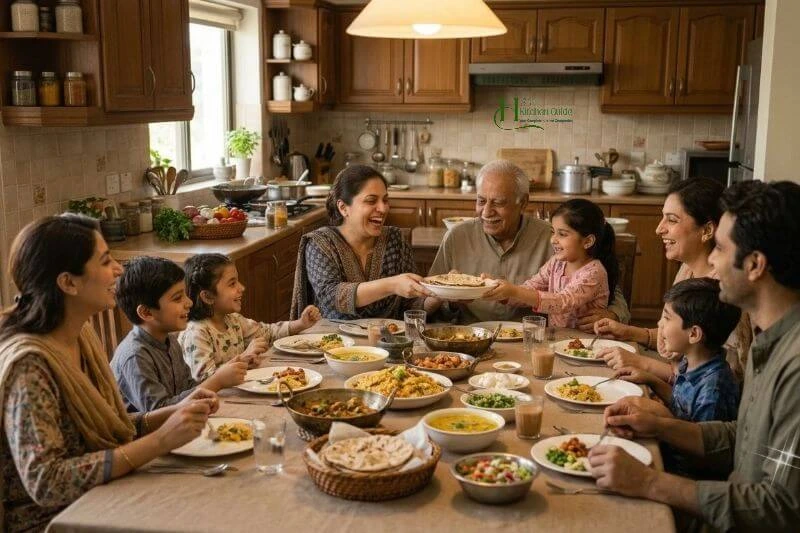
The whole point of preparing a stress-free kitchen for family gatherings and special occasions is to make hosting easier—not to spend the entire event cooking and cleaning.
Once the food is served, give yourself permission to step away from the kitchen.
Let Your Family Help
You do not have to manage every little task yourself. Ask someone to refill drinks, bring dishes to the table, clear plates, or help with cleanup.
Even small jobs can take some pressure off you.
Keep Expectations Realistic
Your guests are there to spend time with you, not to inspect whether every dish is perfectly presented or whether your kitchen looks like a magazine.
Maybe one dish takes longer than expected. Maybe you forget one small thing. That’s okay.
A successful gathering is one where everyone feels comfortable, the food is enjoyed, and you get to be part of the occasion too.
Whether you’re hosting an Eid gathering, Rabi-ul-Awwal get-together, family dawat, birthday dinner, or another special occasion, planning ahead can help you spend less time managing kitchen chaos and more time with the people who matter.
Quick Checklist for a Stress-Free Family Gathering
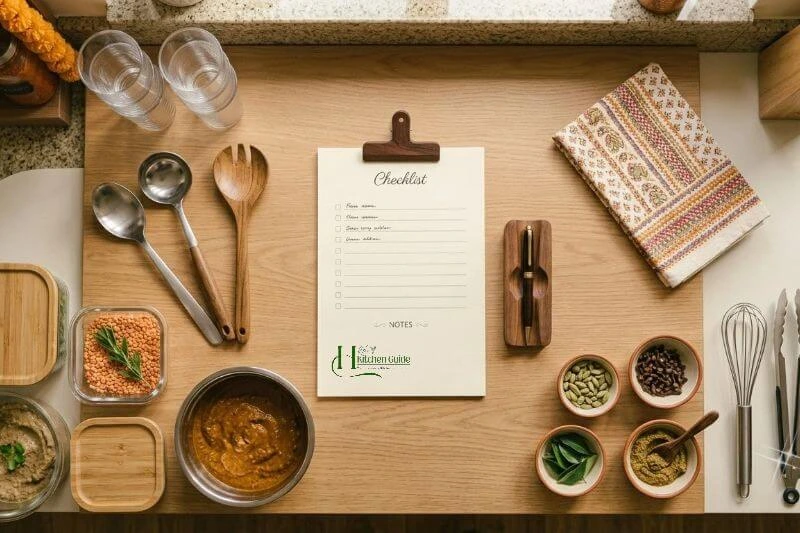
Before your guests arrive, take a few minutes to run through this simple checklist. You don’t need to do everything perfectly—just make sure the essentials are covered.
- ☐ Menu planned and ingredients checked
- ☐ Make-ahead dishes prepared
- ☐ Vegetables and other ingredients prepped
- ☐ Serving dishes and utensils ready
- ☐ Drinks and glasses arranged
- ☐ Kitchen counters cleared
- ☐ Fridge and pantry checked
- ☐ Leftover containers kept ready
- ☐ Main cooking finished with some buffer time
- ☐ Family members assigned small tasks
- ☐ Final cleanup completed
Whether you’re preparing for Eid, a Rabi-ul-Awwal gathering, a family dawat, or another special occasion, this checklist can help you stay organized without making hosting feel like another full-time job.
One Last Reminder
You don’t need a perfect kitchen or an elaborate menu to make your guests feel welcome. Plan ahead, simplify where you can, and leave yourself enough time to actually enjoy the gathering.
After all, the best part of hosting isn’t how much you managed to cook—it’s the time you get to spend together.
Frequently Asked Questions (FAQs)
Q. How do I prepare my kitchen for guests?
Ans: Start by planning your menu, checking your ingredients, clearing your counters, and preparing serving dishes and utensils. Preparing a few things ahead of time can make your kitchen much easier to manage when guests arrive.
Q. How can I make cooking for a family gathering less stressful?
Ans: Choose a realistic menu, prepare make-ahead dishes where possible, and create a simple cooking schedule. Avoid leaving several complicated dishes to be finished at the last minute.
Q. Do I need a large kitchen to host family gatherings?
Ans: No. A large kitchen can provide more working space, but good organization matters more. Keep counters clear, choose a manageable menu, organize your serving essentials, and avoid overcrowding the cooking area.
Q. What should I prepare the day before a gathering?
Ans: Depending on your menu, you can chop vegetables, marinate meat, prepare desserts or sauces, check your pantry, and arrange serving dishes. You can also prepare your table and drinks station in advance.
Q. How do I keep my kitchen organized while cooking?
Ans: Use the clean-as-you-go method. Put ingredients away after using them, rinse utensils when possible, wipe small spills, and keep your main preparation and cooking areas clear.
Q. What food should I serve at a family gathering?
Ans: Choose dishes according to the number of guests, your available time, and your kitchen space. A combination of one or two main dishes, a side, a simple appetizer, dessert, and drinks can be enough for a relaxed gathering.
Q. How can I prepare my kitchen for an Eid gathering?
Ans: For an Eid gathering, plan the menu in advance, prepare make-ahead dishes, arrange serving dishes and drinks, and leave some time between finishing the cooking and your guests’ arrival. This allows you to enjoy the occasion instead of staying busy in the kitchen.
Q. How can I prepare my kitchen for a Rabi-ul-Awwal gathering?
Ans: Keep the menu manageable and prepare ingredients, serving dishes, drinks, and other essentials ahead of time. If you’re serving traditional food or sweets, prepare whatever you can in advance so the kitchen does not become overwhelming.
Q. How do I avoid last-minute cooking stress?
Ans: Make a simple cooking schedule and work backwards from your planned serving time. Identify which dishes can be prepared earlier and leave a buffer for unexpected delays.
Q. How do I make cleanup easier after a family gathering?
Ans: Keep food-storage containers, trash bags, dish soap, and kitchen towels ready before guests arrive. Rinse and stack dishes during natural breaks instead of allowing everything to pile up.
Final Thoughts
A stress-free kitchen for family gatherings and special occasions is not about having a perfect kitchen or preparing an impressive number of dishes. It is about making thoughtful choices before the guests arrive.
Plan a realistic menu, prepare what you can ahead of time, keep your kitchen organized, and give yourself a little extra time before the gathering begins.
Whether you’re hosting Eid, a Rabi-ul-Awwal gathering, a family dawat, or a simple dinner with friends and family, these small steps can make hosting feel much easier.
Most importantly, don’t forget to enjoy your own gathering. Your guests are coming to spend time with you—not to see how long you can stay in the kitchen.
You May Also Like
- 👉 Must-Have Kitchen Utensils for Every Home Cook
👉 Pantry Organization Ideas for Small Kitchens
👉 Natural Kitchen Cleaning Hacks for Busy Homemakers - 👉 Appliances for Small Kitchens
Explore More Kitchen Guides
Looking for more practical kitchen tips, organization ideas, recipes, and helpful buying guides? Explore more from Her Kitchen Guide and make your kitchen work smarter for you.
📌 Love these ideas? Save this post on Pinterest so you can easily find it whenever you need.
📘 Follow Her Kitchen Guide on Facebook for practical kitchen tips, easy recipes, and simple organization ideas shared.
📷 Follow Her Kitchen Guide on Instagram for quick kitchen inspiration, behind-the-scenes tips, and everyday organization ideas.