⭐ Should You Buy a Microwave or Oven First?
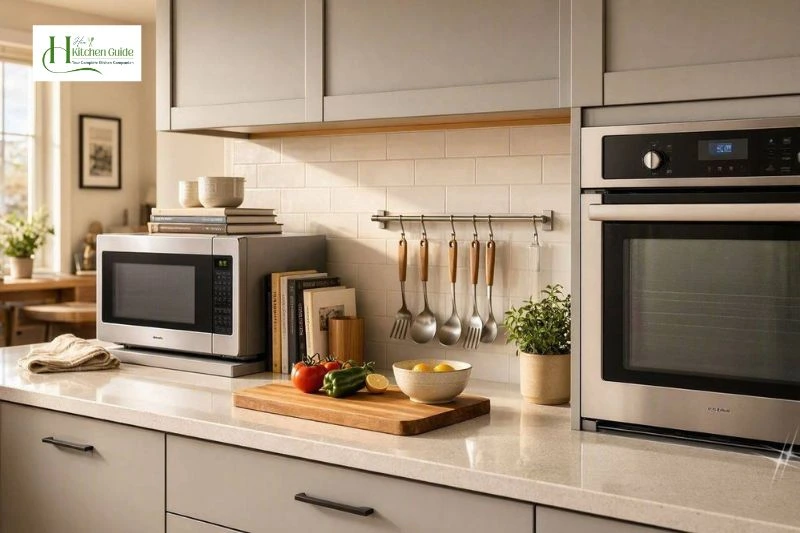
If you mainly need fast reheating, defrosting, and everyday convenience, a microwave is usually the more practical first choice. If you want to bake, roast, grill, brown, or prepare crispy foods, an oven is the better option. If you have limited space but want both types of cooking, a convection microwave can be a useful middle ground.
| If Your Main Need Is… | Choose… | Best For |
|---|---|---|
| Quick reheating and defrosting | Microwave | Daal, curry, rice, leftovers, drinks, small portions |
| Baking and roasting | Oven | Cakes, cookies, pizza, chicken, vegetables |
| Both microwave heating and oven-style cooking | Convection Microwave | Small kitchens, occasional baking and roasting |
| Large family meals and regular baking | Oven | Large dishes, baked meals, roasting and browning |
The best choice isn’t necessarily the appliance with the most features. It’s the one you’ll actually use regularly.
What I Learned About Choosing Kitchen Appliances
If you’re setting up a kitchen and looking at your budget, you may be wondering whether a microwave or an oven deserves that first spot.
I understand the confusion because kitchen appliances can quickly become expensive, especially when you’re trying to decide what you actually need rather than simply buying everything at once.
Over the years, I’ve learned that there isn’t one appliance that’s automatically better for every home. The right choice depends on your family’s eating habits, the food you cook, your available kitchen space, and how much convenience you need during busy days.
For a family that regularly cooks daal, curry, rice, vegetables, and other stovetop meals, a microwave can be incredibly useful for reheating individual portions.
But if you’re excited about homemade cakes, pizza, roasted chicken, baked pasta, or crispy vegetables, an oven may give you much more value.
So before you spend your money, let’s look at what each appliance actually does and which one makes more sense for your kitchen.
Microwave vs Oven: What’s the Basic Difference?
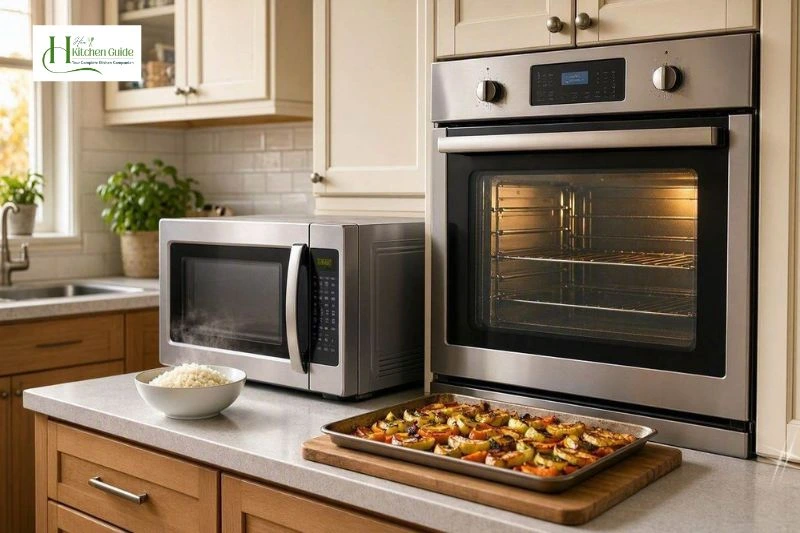
The biggest difference is how each appliance heats and cooks food.
A regular microwave uses microwave energy to heat food quickly, while a conventional oven uses surrounding heat to cook food gradually.
That difference affects cooking time, texture, browning, and the types of meals you can prepare.
| Feature | Microwave | Oven |
|---|---|---|
| Main purpose | Reheating and quick heating | Baking, roasting and cooking |
| Heating method | Microwave energy | Heating elements and hot air |
| Speed for reheating | Very fast | Slower |
| Preheating | Usually not required | Usually required |
| Browning | Very limited | Excellent |
| Crisping | Limited | Much better |
| Baking | Limited in a regular microwave | Excellent |
| Roasting | Limited | Excellent |
| Small portions | Very convenient | Less convenient |
| Large dishes | Limited | Better suited |
So, when comparing a microwave vs oven, neither appliance wins in every category. They are designed to solve different kitchen problems.
How Does a Microwave Work?
A microwave uses electromagnetic energy to heat food. This allows it to heat food quickly without first heating the entire cooking chamber like a conventional oven.
That’s why you can place a plate of leftover rice or curry inside, set the time, and have it ready within minutes.
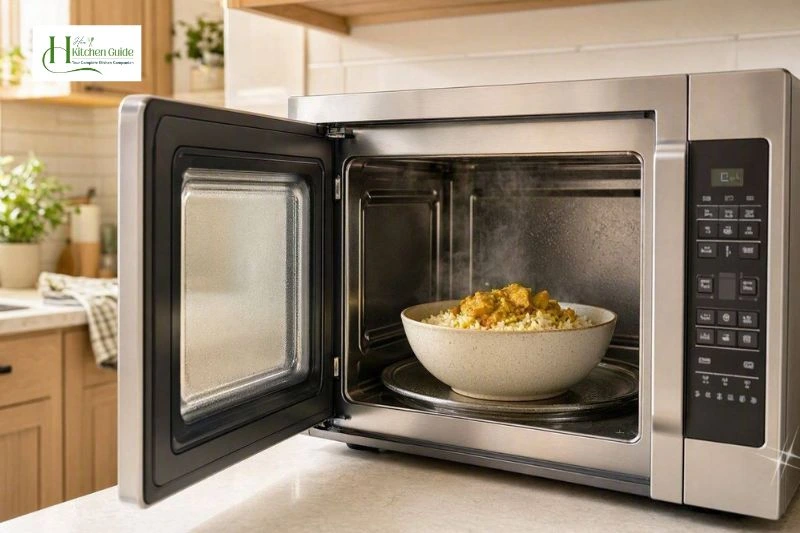
A microwave is particularly useful for:
- Reheating leftover meals
- Warming milk, tea, or coffee
- Defrosting suitable frozen foods
- Heating small portions
- Preparing quick snacks
- Reheating children’s meals
- Making simple microwave recipes
For busy households, this convenience can make everyday meal preparation much easier.
For microwave safety, including guidance on microwave-safe containers and avoiding potential hazards, see the U.S. Food and Drug Administration’s microwave oven safety guidance
What a Regular Microwave Doesn’t Do Well
A regular microwave isn’t designed to create the same dry, browned, crispy surface you get from an oven.
⭐Tip: Reheated pizza may become hot quickly in a microwave, but the crust can become soft rather than crisp.
That’s one of the biggest things to understand before buying one.
How Does an Oven Work?
A conventional oven cooks food using surrounding heat produced by heating elements or gas, depending on the appliance.
The food cooks gradually as heat surrounds it, which allows many dishes to develop browning, crisp edges, and a more complex cooked texture.
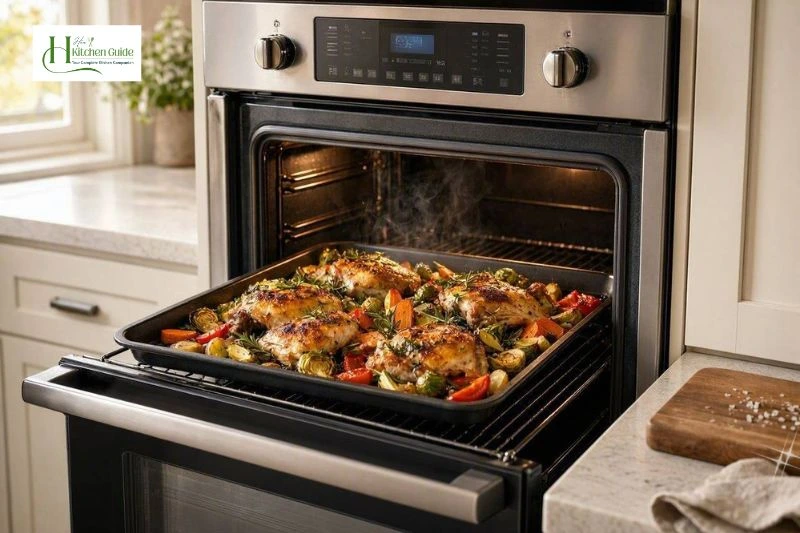
An oven is especially useful for:
- Cakes and cupcakes
- Cookies and biscuits
- Homemade bread
- Pizza
- Roasted chicken
- Roasted vegetables
- Baked pasta
- Lasagna
- Casseroles
- Other baked dishes
Some ovens also include convection cooking, which circulates hot air around the food for more even cooking.
The trade-off is that an oven generally takes longer than a microwave, and many recipes require preheating first.
But if browning, crisping, baking, or roasting matters to you, that extra time is part of what makes an oven useful.
Microwave vs Oven: What Can You Actually Cook?
Before choosing an appliance, think about what you already cook at home—not what you imagine you might cook someday.
Your everyday cooking habits are one of the best ways to decide.
What Is a Microwave Best For?
A regular microwave is excellent for quick everyday tasks such as:
- Reheating daal and curry
- Warming rice and pulao
- Reheating pasta
- Heating milk or drinks
- Defrosting frozen food
- Warming individual portions
- Heating ready-to-eat meals
- Preparing quick snacks
For example, if you’ve cooked a large pot of chicken curry and rice, you can reheat only the portion you need instead of heating the entire dish again.
This makes a microwave especially practical for busy families and households where meals are often reheated at different times.
What Is an Oven Best For?
An oven becomes more useful when you want to actually cook food rather than simply warm it.
It’s ideal for:
- Cakes
- Cookies
- Homemade pizza
- Baked chicken
- Roasted vegetables
- Lasagna
- Baked pasta
- Bread
- Casseroles
If you’re planning to learn baking or regularly make oven-based meals, an oven will give you cooking options that a basic microwave cannot provide.
And if you’re setting up your kitchen from scratch, don’t forget the everyday tools that make cooking easier. You can also see my guide to Must-Have Kitchen Utensils for Every Home Cook.
What About Everyday Pakistani Cooking?
This is where the decision becomes more personal.
For many Pakistani households, everyday meals may include:
- Daal
- Salan
- Biryani
- Rice
- Sabzi
- Keema
- Chicken dishes
- Frozen homemade foods
- Leftovers from the previous meal
If your main need is quickly reheating these foods, a microwave can be incredibly convenient.
⭐Tip: Instead of reheating one plate of daal or rice on the stove, you can use a microwave and continue preparing the rest of the meal.
On the other hand, if you want to make cakes, homemade pizza, roasted chicken, baked pasta, or crispy oven dishes, an oven becomes much more valuable.
So don’t ask:
“Which appliance is better?”
Ask:
“Which appliance will I actually use several times a week?”
That answer will usually make your decision much easier.
Microwave vs Oven: Which One Is Faster?
For reheating and heating small portions, a microwave usually wins on speed.
You don’t normally need to preheat it, and you can heat a single serving in a short amount of time.
An oven is different. It often needs preheating, followed by a longer cooking period.
When a Microwave Saves More Time
A microwave is useful when you need to:
- Reheat leftovers quickly
- Warm one serving
- Defrost suitable foods
- Heat breakfast
- Warm milk or drinks
- Prepare a quick snack
When an Oven Is Worth the Extra Time
If you’re baking a cake or roasting chicken, the oven isn’t necessarily “slow”; it’s performing a completely different cooking job.
The longer cooking process allows foods to develop:
- Browning
- Crisp edges
- Baked texture
- Roasted flavour
So comparing the two purely by cooking speed isn’t really fair.
Microwave = speed and convenience for heating.
Oven = controlled heat for baking, roasting and browning.
Microwave vs Oven: Which Uses More Electricity?
Energy use is another consideration when buying a kitchen appliance.
A microwave often runs for a relatively short time, particularly when you’re reheating a small portion.
An oven may run for longer and may require preheating before cooking.
However, you shouldn’t assume that one appliance always uses less electricity.
Actual energy consumption depends on:
- Appliance wattage
- Cooking time
- Food quantity
- Cooking temperature
- How frequently you use it
- Appliance efficiency
⭐Tip: Using a microwave for a few minutes to reheat one bowl of rice is very different from running an oven for an hour to bake or roast a large meal.
Actual energy use varies by appliance type, size, wattage, cooking time, and how frequently you use it. For more information about choosing energy-efficient household appliances, you can also refer to ENERGY STAR’s appliance guidance.
Is a Microwave More Practical for Small Meals?
For small portions and quick reheating, a microwave can be the more practical option because you don’t need to heat a large oven cavity.
If you’re regularly reheating individual portions, this convenience can also save time.
When Does an Oven Make More Sense?
If you’re already preparing a large baked dish, roasting a family-size meal, or baking multiple items, an oven is designed for exactly that type of cooking.
So instead of choosing based only on electricity ratings, think about what you’re cooking and how long you’ll use the appliance.
Which Is Better for a Small Kitchen?
Kitchen space matters just as much as cooking preferences.
A microwave can be easier to accommodate in a small kitchen because many models are compact and don’t require the same type of installation as a full-size oven.
However, if baking is one of your priorities, giving some valuable counter or cabinet space to an oven may be worthwhile.
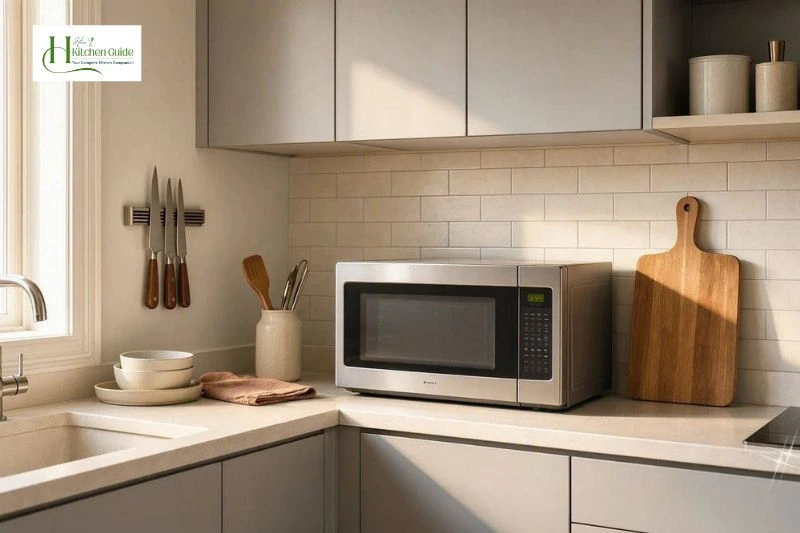
Before buying:
- Measure your available space.
- Check the appliance dimensions.
- Consider ventilation and clearance requirements.
- Think about where you’ll place it.
- Make sure the appliance won’t interfere with your normal kitchen workflow.
If you’re trying to make a small kitchen more functional, you may also find these Pantry Organization Ideas for Small Kitchens useful.
If you’re looking for more appliance recommendations for small spaces, our guide to best kitchen appliances for small kitchens covers 10 compact appliances worth considering.
Which One Should You Buy First for a New Home?
If you’re setting up your first kitchen after marriage, our complete kitchen essentials for new brides checklist can help you prioritize which appliances and tools to buy first.
You don’t need to buy every kitchen appliance on day one.
Start with the appliance that solves your biggest everyday problem.
Choose a Microwave First If You:
A microwave may be the better first purchase if you:
- Reheat food frequently
- Have a busy daily routine
- Cook most meals on the stovetop
- Need quick heating
- Have limited kitchen space
- Live in a small household
- Want an appliance that’s simple for the whole family to use
If your normal routine is cooking daal, sabzi, curry, or rice on the stove and reheating portions later, a microwave can quickly become one of your most-used appliances.
Choose an Oven First If You:
An oven may be the better choice if you:
- Love baking
- Want to learn baking
- Make homemade pizza
- Roast chicken or vegetables
- Prepare baked pasta
- Prefer browned or crispy food
- Cook larger meals regularly
If you’re already excited about making homemade cakes, pizza, bread, or roasted dishes, there’s little point in buying a microwave first simply because it’s convenient.
What If Your Budget Is Limited?
If you’re working with a limited budget, don’t choose an appliance simply because it has more buttons or features.
Instead, ask yourself:
What do I cook most often?
If your meals are mostly stovetop dishes and your biggest problem is reheating, start with a microwave.
What cooking skill do I want to develop?
If you want to learn baking or make oven-based meals regularly, an oven may be the better investment.
What do I have space for?
A large oven may not make sense if your kitchen doesn’t have a suitable place for it.
Buy according to your actual routine not your imagined future kitchen.
You can always add the second appliance later when your budget and space allow.
If you’re also deciding between different cooking surfaces, our induction vs gas stove comparison can help you choose the right cooktop for your kitchen.
What About a Convection Microwave?
A convection microwave combines microwave cooking with convection heating.
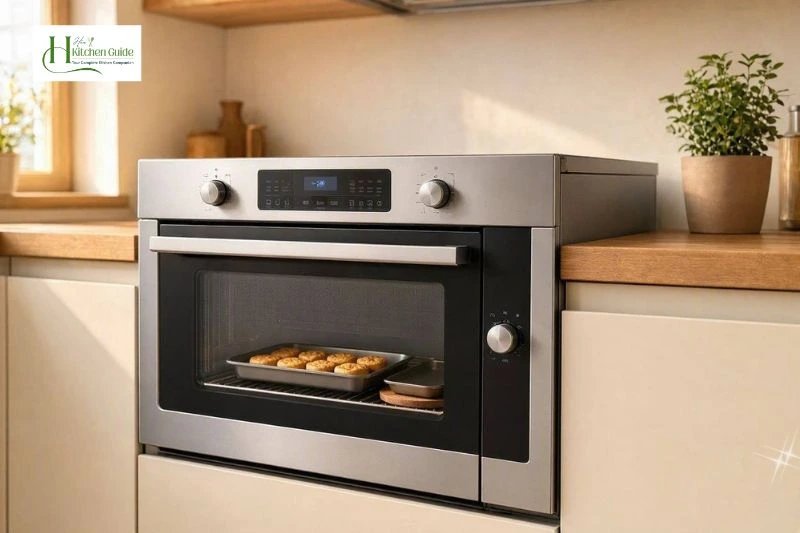
Depending on the model, it may allow you to:
- Reheat food using microwave mode
- Bake using convection mode
- Roast certain foods
- Brown or crisp foods better than a regular microwave
For someone with limited kitchen space, this can be an interesting middle-ground option.
However, a convection microwave isn’t automatically equivalent to every full-size oven.
Before buying, check:
- Capacity
- Convection temperature range
- Cooking modes
- Power requirements
- Available accessories
- Manufacturer instructions
- Warranty and after-sales service
Who Should Consider a Convection Microwave?
It may be worth considering if you:
- Have a small kitchen
- Want one appliance for several jobs
- Occasionally bake
- Occasionally roast
- Don’t want two separate appliances
- Need to save counter space
But don’t buy one simply because it has more functions.
Choose the functions you’ll actually use.
Practical Tips Before Buying a Microwave or Oven
1. Think About What You Actually Cook
Make a list of your most common meals.
If you mostly cook daal, curry, rice, vegetables and other stovetop foods, a microwave may provide more everyday convenience.
If you regularly bake cakes, pizza, bread, or roast chicken, an oven may be more useful.
💚 Her Kitchen Guide Tip:
Don’t buy an appliance for the recipes you hope to make someday. Buy for the cooking habits you already have—or realistically plan to develop.
2. Measure Your Kitchen Space First
Before shopping, measure the space where the appliance will go.
Don’t forget to check the manufacturer’s required clearance and ventilation space rather than measuring only the appliance itself.
This is especially important in small kitchens.
3. Consider Your Family Size
Your family size affects the capacity you’ll need.
A small household may not need a large oven.
A larger family, however, may benefit from an oven that can accommodate larger dishes.
For microwaves, think about the plates and containers you normally use. A very compact model may become inconvenient if your regular dinner plate doesn’t fit comfortably.
4. Don’t Choose Only by Price
The cheapest appliance isn’t necessarily the best value.
Compare:
- Capacity
- Power/wattage
- Cooking functions
- Ease of cleaning
- Size
- Installation requirements
- Warranty
- After-sales service
- Energy use
A slightly more expensive appliance can be worth it if it better matches your everyday needs.
5. Check the Controls
If you’re buying your first appliance, complicated controls can become frustrating.
Look for controls that are easy to understand and use.
More functions don’t automatically mean a better appliance.
Useful functions matter more than a long feature list.
6. Think About Cleaning
Food splashes and spills are unavoidable in a regularly used kitchen appliance.
Before buying, think about:
- How easy the interior is to wipe
- Whether removable parts can be cleaned easily
- Whether the door and controls are easy to maintain
- How accessible the interior is
A practical appliance that’s easy to clean is more likely to become part of your everyday routine.
For more simple ways to keep your kitchen manageable, see these Natural Kitchen Cleaning Hacks for Busy Homemakers.
7. Don’t Assume a Microwave Can Replace an Oven
This is one of the most important points for beginners.
A regular microwave is excellent for:
- Reheating
- Quick heating
- Defrosting
But it isn’t designed to provide the same baking, roasting, browning, and crisping results as a conventional oven.
If baking is important to you, check exactly what type of appliance you’re buying.
A regular microwave and a convection microwave are not the same thing.
Microwave vs Oven: Quick Comparison
| Feature | Microwave | Conventional Oven |
|---|---|---|
| Reheating | ⭐⭐⭐⭐⭐ | ⭐⭐ |
| Defrosting | ⭐⭐⭐⭐⭐ | ⭐ |
| Baking | ⭐ | ⭐⭐⭐⭐⭐ |
| Roasting | ⭐⭐ | ⭐⭐⭐⭐⭐ |
| Browning | ⭐ | ⭐⭐⭐⭐⭐ |
| Crisping | ⭐ | ⭐⭐⭐⭐⭐ |
| Small portions | Excellent | Less convenient |
| Large meals | Limited | Excellent |
| Preheating | Usually not required | Usually required |
| Speed for reheating | Excellent | Slow |
| Space requirement | Usually smaller | Usually larger |
| Best for | Convenience | Baking & cooking |
Which Is Better for Beginners?
If you’re buying your first kitchen appliance, the answer depends on your routine.
Choose a Microwave if:
Quick reheating and convenience are your priorities.
Choose an Oven if:
Baking, roasting, browning and crispy food are your priorities.
Consider a Convection Microwave if:
You want both microwave heating and some oven-style cooking in one appliance.
The “best” appliance isn’t necessarily the most expensive or advanced one.
It’s the one you’ll actually use.
Frequently Asked Questions (FAQ)
Q.Is a microwave oven the same as a microwave?
Ans: The terminology can vary between products and markets. A basic microwave is primarily designed for heating, reheating, and defrosting, while some appliances sold as microwave ovens may include additional cooking functions. Always check the manufacturer’s specifications to understand exactly what a particular model can do.
Q.Can a microwave replace an oven?
Ans: A regular microwave cannot fully replace a conventional oven. It’s excellent for reheating, quick heating, and defrosting, but traditional oven tasks such as baking, roasting, browning, and crisping generally require an oven or an appliance specifically designed for those functions.
Q.Is a microwave faster than an oven?
Ans: For reheating and heating small portions, a microwave is usually faster because it doesn’t require the same type of preheating and cooking time as an oven. However, an oven is designed for different cooking tasks, so speed shouldn’t be the only factor when choosing between them.
Q.Can you bake in a microwave?
Ans: It depends on the type of microwave. A basic microwave isn’t the same as a convection microwave. If baking is important to you, check whether the model specifically includes a convection or baking function and follow the manufacturer’s instructions.
Q. Which is better for a small kitchen, a microwave or oven?
Ans: For many small kitchens, a microwave can be easier to accommodate and is very useful for everyday reheating. However, if baking is a major part of your cooking routine, an oven may be worth giving up some space for. Another option is a convection microwave if its features and capacity suit your needs.
Q. Can I use a microwave to reheat curry, daal and rice?
Ans: Yes. You can use a microwave to reheat cooked foods such as curry, daal and rice, provided they are stored and reheated safely. For general food-storage and reheating guidance, see the USDA’s food safety recommendations for leftovers.
Q. Does a microwave use more electricity than an oven?
Ans: Not necessarily. A microwave often operates for a shorter period when reheating small portions, while an oven may require preheating and longer cooking times. Actual electricity use depends on the appliance’s wattage, cooking time, food quantity, and how frequently you use it.
Q. Can I use an oven for reheating food?
Ans: Yes, but it is generally less convenient for small portions because the oven takes longer to heat. For reheating a single plate of rice, curry, or daal, a microwave is usually the more convenient option.
Q.Is an oven better than a microwave for cooking chicken?
Ans: It depends on the dish. An oven is better when you want to bake or roast chicken and develop browning and a more developed texture. A microwave is more useful for quickly reheating already-cooked chicken.
Q.What is better for baking, a microwave or an oven?
Ans: A conventional or convection oven is generally better for baking. A regular microwave is mainly designed for heating and reheating, while a convection microwave may offer baking capabilities depending on its features
Q. Should I buy a microwave or an oven first for a new home?
Ans: If your main need is quick reheating and defrosting, a microwave can be a practical first purchase. If baking, roasting, homemade pizza, and browned foods are your priorities, an oven may be the better first investment. Consider your cooking habits, budget, available space, and family size before deciding.
A Simple 3-Question Test Before You Buy
Still confused?
Answer these three questions:
1. What do I need help with most?
Reheating → Microwave
Baking/roasting → Oven
2. How much space do I have?
Limited space → Microwave or convection microwave
Enough space → Either, depending on your cooking needs
3. What will I use several times a week?
Choose that appliance first.
It sounds simple, but this is often the most practical way to make the decision.
The Bottom Line
There is no universal winner in the microwave vs oven debate.
A microwave is the practical choice when you want speed, convenience, reheating, and quick everyday heating.
An oven is the better choice when you want baking, roasting, browning, crisping, and larger meals.
A convection microwave can be worth considering if you have limited space and want a combination of microwave and oven-style functions.
And if you’re setting up a new kitchen, you don’t have to buy everything immediately.
Start with the appliance that solves your biggest everyday problem. You can always add the second one later when your budget and space allow.
💚 Her Kitchen Guide Tip:
A kitchen doesn’t become more useful just because it has more appliances. The best kitchen is one where every appliance earns its place by making your everyday routine easier.
Final Verdict: Microwave or Oven?
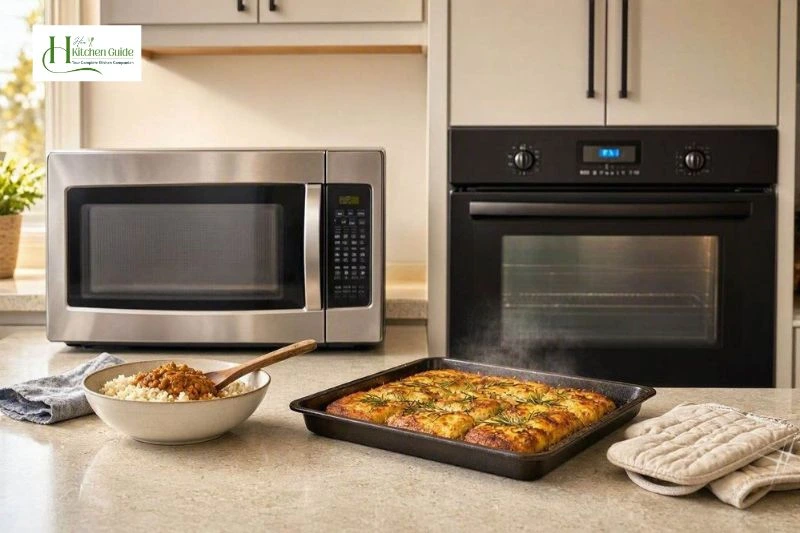
So, which one should you buy first?
🥇 Buy a Microwave First If:
You mainly need quick reheating, defrosting, and everyday convenience.
🥇 Buy an Oven First If:
You want to bake, roast, brown, crisp, and prepare oven-based meals regularly.
🥇 Consider a Convection Microwave If:
You have limited space and want one appliance that can handle microwave heating plus some baking and roasting functions.
⭐The best kitchen appliance isn’t the one with the longest feature list or the highest price tag. It’s the one that fits your cooking habits, your kitchen, and your everyday life.
📌 Love these ideas? Save this post on Pinterest so you can easily find it whenever you need.
📘 Follow Her Kitchen Guide on Facebook for practical kitchen tips, easy recipes, and simple organization ideas shared.
📷 Follow Her Kitchen Guide on Instagram for quick kitchen inspiration, behind-the-scenes tips, and everyday organization ideas.
You May Also Like
👉 Must-Have Kitchen Utensils for Every Home Cook
👉 Pantry Organization Ideas for Small Kitchens
👉 Natural Kitchen Cleaning Hacks for Busy Homemakers
Explore More Kitchen Guides
Looking for more practical kitchen tips, organization ideas, recipes, and helpful buying guides? Explore more from Her Kitchen Guide and make your kitchen work smarter for you.