⭐ How to Get Rid of Fruit Flies in Kitchen?
To get rid of fruit flies in your kitchen, remove overripe fruit and food waste, clean the sink and drain, empty damp garbage or compost bins, and use a simple fruit fly trap. During hot or humid weather, keeping food covered, surfaces dry, and windows and doors protected with mesh screens can also help prevent them from returning.
You wipe the kitchen counter, wash the dishes, take out the trash and somehow, those tiny fruit flies are still there.
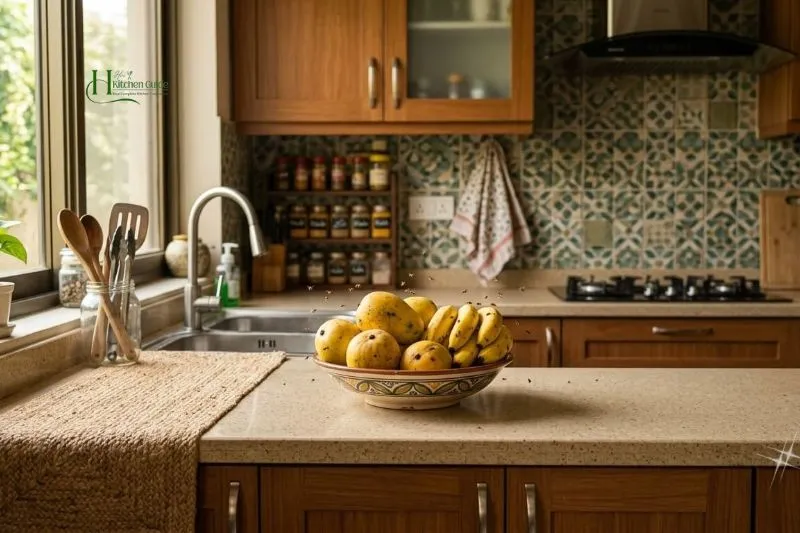
One or two little flies around the fruit bowl may not seem like a big deal at first. But leave a ripe banana, mango peel, juice spill, or damp kitchen bin unnoticed for a day or two, and suddenly it feels like they have invited the whole family over.
If you live in Pakistan or another warm, humid part of South Asia, you may notice this problem becoming particularly annoying during hot and rainy weather. A kitchen can stay damp for longer after washing dishes, fresh produce may sit out on the counter, and wet food waste can become an easy attraction for tiny flies.
And here is the frustrating part: killing the flies you can see is not enough.
If there is still a food source, moisture, or hidden organic residue somewhere in your kitchen, new flies can keep appearing.
The good news is that you usually do not need to begin with strong chemical sprays. Start by removing food sources, cleaning damp areas and using a suitable trap. A better approach is to deal with the problem from several angles: remove what attracts them, clean the places where they may be hiding, trap the adult flies, and make your kitchen less inviting in the first place.
In this guide, we’ll look at how to get rid of fruit flies in your kitchen naturally and fast, including what to check around your fruit bowl, kitchen sink, drain, garbage bin, and indoor compost container. I’ll also share practical prevention tips that make sense for everyday Pakistani and South Asian kitchens, especially during humid weather.
So before you reach for another spray, let’s find out why those tiny flies are there in the first place and how to make your kitchen much less welcoming to them.
Why Do Fruit Flies Get Worse During Hot and Rainy Weather?
Fruit flies don’t appear simply because it is raining. However, warm temperatures, humidity, moisture, and easily available food waste can create conditions in which they become much more noticeable.
Think about what happens in a busy kitchen during humid weather. You wash vegetables and fruit, wipe the counters, rinse dishes, empty food scraps into the bin, and perhaps leave a fruit bowl on the counter. Even when the kitchen looks clean, tiny amounts of moisture and food residue can remain in places you don’t immediately notice.
For example, fruit flies may be attracted to:
- Overripe bananas, mangoes, peaches, or other soft fruit
- Cut fruit left uncovered
- Fruit peels and food scraps
- Sticky juice or soft-drink spills
- Damp garbage or compost containers
- Food residue around the sink
- Organic buildup inside drains
- Sticky bottles, cans, or recycling
- Forgotten produce in a cabinet or pantry
This is why simply wiping the countertop may not solve the whole problem.
A clean-looking kitchen can still have a small hidden food or moisture source that keeps attracting flies.
A Small Kitchen Habit That Can Make a Big Difference
If your kitchen gets humid during the rainy season, try getting into the habit of doing a quick “dry and check” routine before going to bed.
Check the sink, wipe away any sticky spills, empty wet food waste, and make sure ripe fruit is covered or stored appropriately. It only takes a few minutes, but it can remove several of the things that make your kitchen attractive to fruit flies.
And if you are already seeing them, don’t worry: we’ll go step by step through the fastest things you can do first.
Are They Really Fruit Flies? Check Before You Treat Them
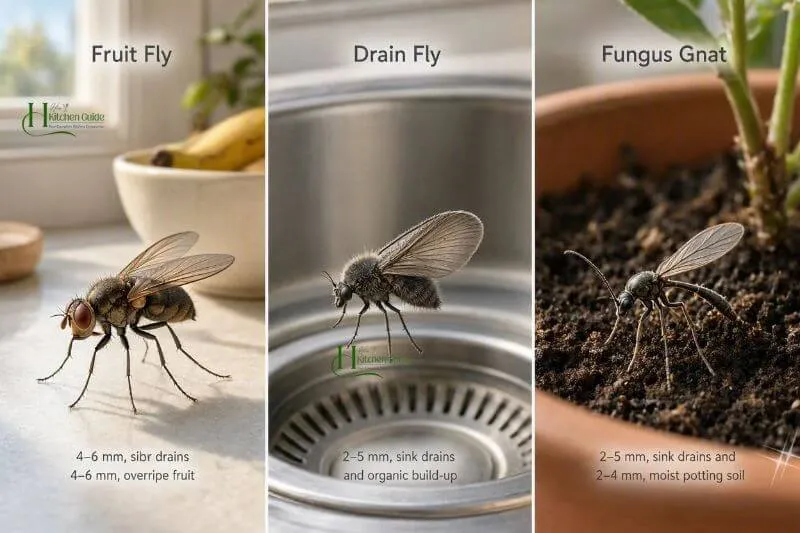
Before you start setting traps everywhere, take a closer look at the tiny flies in your kitchen. Not every small flying insect is a fruit fly, and identifying the problem correctly can save you time and effort.
Fruit Flies
Fruit flies are usually very small and are commonly seen around ripe or overripe fruit, food scraps, recycling, juice spills, and garbage bins. You may notice several of them hovering around your fruit bowl or kitchen waste.
If that’s where you’re seeing most of the activity, fruit flies are a likely culprit.
Drain Flies
Drain flies are different. They are often found around sinks, drains, and other damp areas and can have a fuzzy or moth-like appearance.
If you keep cleaning your fruit bowl but the tiny flies continue appearing around the sink, your drain may deserve a closer inspection.
Fungus Gnats
Fungus gnats are usually associated with houseplants and moist potting soil. If the flies seem to be coming from your indoor plants rather than your kitchen food or waste, you may be dealing with fungus gnats instead.
Quick Identification Guide
| Type | Common Location | What to Check |
|---|---|---|
| Fruit flies | Fruit bowl, food waste, recycling | Ripe produce and food residue |
| Drain flies | Sink and drain | Dampness and organic buildup |
| Fungus gnats | Houseplants | Moist potting soil |
Why does this matter? Because the solution depends on where the insects are breeding or gathering. A vinegar trap may help with fruit flies, but if your real problem is a damp drain or overwatered houseplant, you need to address that source too.
How to Get Rid of Fruit Flies in the Kitchen Fast
If you’re seeing fruit flies everywhere and want to reduce the problem quickly, don’t start by chasing individual flies around the kitchen. Start with the things attracting them.
Your First 30-Minute Kitchen Reset
Here is a simple action plan you can follow:
- Remove overripe or damaged fruit.
Throw away anything that is fermenting, leaking, or badly overripe. If some fruit is still good, cover it or refrigerate it where appropriate. - Empty the kitchen garbage.
Don’t just tie the bag and leave it beside the bin. Take it outside and clean any food residue left inside the container. - Check your compost container.
If you keep food scraps indoors, look for exposed fruit peels or damp organic waste. - Rinse sticky bottles and cans.
A little juice, soda, or other sweet residue left inside recycling can be enough to attract flies. - Wipe kitchen surfaces thoroughly.
Pay attention to counters, cabinet handles, appliance edges, and areas around your fruit bowl. - Clean the sink strainer.
Food particles can collect here without being obvious. - Check the drain.
If the flies seem concentrated around your sink, don’t skip this step. - Dry the sink and surrounding area.
Fruit flies are attracted to food sources, while other small flies may thrive around damp organic material. - Set up a fruit fly trap.
Put it close to the area where you have noticed the most activity. - Cover exposed food.
Don’t leave cut fruit, leftovers, juices, or other food uncovered while you’re dealing with the infestation.
Will This Get Rid of Fruit Flies Immediately?
You may notice fewer visible flies fairly quickly after removing their food sources and setting a trap, but don’t expect every fly to disappear within a few minutes.
If eggs or larvae are already present somewhere in the kitchen, you may continue seeing new adults for a while. That’s why
source removal + cleaning + trapping + prevention
works better than simply killing the flies you can see.
💡 Her Kitchen Guide Tip:
If you have children at home, involve them in the easy parts such as putting ripe fruit into the refrigerator or helping check for uncovered food, but keep cleaning products and traps safely out of their reach.
Make an Apple Cider Vinegar Fruit Fly Trap
If you have already removed the obvious food sources but still have fruit flies hovering around, a simple homemade trap can help reduce the adult flies.
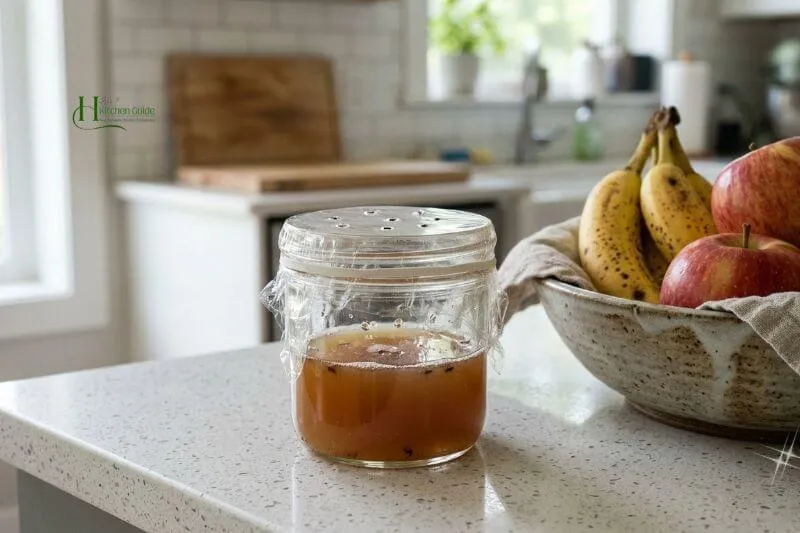
One of the most commonly used DIY options is an apple cider vinegar fruit fly trap. The vinegar provides an attractive smell, while a small amount of dish soap helps make it harder for flies to escape once they land on the liquid.
What You Need
- A small glass, bowl, or jar
- Apple cider vinegar
- 1–2 drops of liquid dish soap
- Plastic wrap
- A rubber band
- A toothpick
How to Make the Trap
- Pour a small amount of apple cider vinegar into the container.
- Add one or two drops of dish soap. You don’t need a lot.
- Cover the top tightly with plastic wrap.
- Secure the plastic wrap with a rubber band.
- Use a toothpick to make several small holes in the plastic wrap.
- Place the trap close to the area where you’ve noticed the most fruit fly activity.
- Check it regularly and replace the mixture when necessary.
The idea is simple: the smell attracts the flies toward the vinegar, while the soapy surface makes it difficult for them to escape.
This vinegar and dish soap method is also described by Michigan State University Extension.
💡 Her Kitchen Guide Tip:
Don’t place the trap right beside a bowl of fresh fruit. Put it near the area where you’ve noticed the flies, while keeping exposed food covered.
Where Should You Put a Fruit Fly Trap?
Placement matters more than many people realize. If you put the trap on the other side of the kitchen while the flies are feeding around the sink or garbage bin, it may not be very effective.
Try placing it near:
- The fruit bowl
- Kitchen sink
- Garbage bin
- Compost container
- Recycling area
- A spot where you regularly notice flies
If you have more than one active area, you can use separate small traps rather than relying on one trap for the entire kitchen.
What If You Don’t Have Apple Cider Vinegar?
Don’t worry if apple cider vinegar isn’t something you normally keep at home.
Other strongly scented fermented liquids or ripe fruit may sometimes be used as bait, including:
- Red wine vinegar
- Wine
- Beer
- A small piece of ripe fruit
- A commercial fruit fly trap
However, these alternatives shouldn’t be presented as equally effective in every situation. The trap is only one part of the solution—removing the food source and cleaning the breeding areas are still essential.
Why Isn’t My Vinegar Trap Catching Anything?
If you have left the trap for a while and it isn’t attracting flies, don’t immediately assume the method doesn’t work.
Check these common problems:
- The insects may not actually be fruit flies.
- There may be a better food source nearby.
- The trap may be too far from the activity.
- The vinegar may be heavily diluted.
- Too much dish soap may interfere with the bait.
- A hidden source may still be attracting the flies.
- The flies may be coming from a drain, compost container, plant, or stored produce.
The biggest mistake is treating the trap as the whole solution. Think of it as a tool for catching adult flies while you remove the conditions that allow the problem to continue.
How to Get Rid of Fruit Flies in the Kitchen Sink
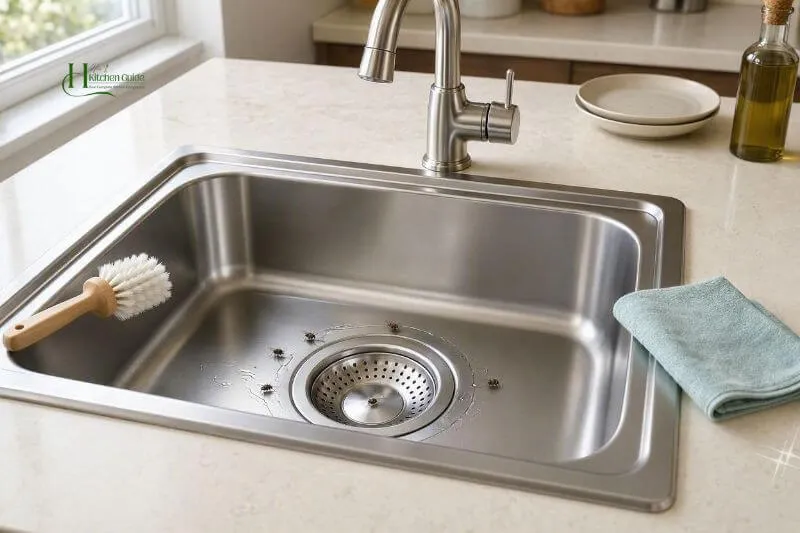
If you keep seeing tiny flies around your sink, don’t ignore that area even if your counters and fruit bowl look perfectly clean.
Food particles can collect around the sink strainer, drain opening, overflow area, or garbage disposal, creating places where organic residue and moisture can remain.
Start with these simple steps:
- Remove food particles from the sink and strainer.
- Scrub around the drain opening.
- Clean the sink thoroughly.
- Check the overflow opening if your sink has one.
- If you have a garbage disposal, clean the accessible parts according to the manufacturer’s instructions.
- Wipe away any food residue around the sink.
- Dry the sink when you’re finished.
- Keep the area as dry as practical overnight.
For more practical ways to keep your counters, sink, and food preparation areas clean, see our guide to Natural Kitchen Cleaning Hacks That Actually Work
A Simple Drain Check
Here’s a simple observation trick if you’re unsure whether the drain is involved.
At night, place a piece of clear plastic wrap over the drain opening and secure it. Check it the next morning.
If small flies are appearing underneath the plastic, the drain may be contributing to the problem.
Keep in mind that this is only a simple household observation method, not a definitive test. If you’re dealing with persistent flies or drainage problems, further inspection may be necessary.
💡 Her Kitchen Guide Tip:
Don’t forget the area underneath and around the sink. A small leak or constantly damp cabinet base can create a completely different problem from the fruit bowl flies you’re trying to catch.
How to Get Rid of Fruit Flies in the Kitchen Drain
Cleaning the visible part of your sink is a good start, but sometimes the problem is hiding just below the surface. Organic residue can build up inside a drain, giving small flies another place to feed or reproduce.
If your fruit fly problem keeps returning even after you’ve cleaned the counters and removed old fruit, give the drain some attention too.
Clean the Drain and Remove Organic Buildup
Start by removing any visible debris around the drain opening and strainer. Then:
- Remove and clean the sink strainer.
- Scrub around the drain opening with an appropriate brush.
- Clean the area around the overflow opening if your sink has one.
- If you have a garbage disposal, clean its accessible components according to the manufacturer’s instructions.
- Rinse away loosened food residue.
- Dry the surrounding sink area when you’re finished.
For persistent problems, a drain brush can help reach areas where a cloth or sponge cannot.
💡 Important:
Don’t assume that pouring a household mixture down the drain will automatically eliminate a fruit fly infestation. The goal is to physically remove organic buildup and moisture rather than rely on a quick DIY trick.
Don’t Mix Cleaning Products
This is especially important when you’re trying several cleaning methods.
Never mix bleach with vinegar, ammonia, or other household cleaning products. Some combinations can produce dangerous fumes.
Use one cleaning product at a time, follow its label instructions, and keep cleaning products away from children and food-preparation areas.
How to Get Rid of Fruit Flies in the Kitchen Bin
Your kitchen bin can become an easy food source for fruit flies, particularly when it contains fruit peels, vegetable scraps, sticky packaging, or other damp food waste.
And during hot or humid weather, nobody wants to open the bin and discover that it has become a tiny insect party.
The good news is that you don’t need anything complicated to tackle it.
Empty the Bin More Frequently
If your kitchen waste contains wet food scraps, try not to let it sit for several days.
During Pakistan’s hot and humid or rainy weather, emptying the bin more frequently can make a noticeable difference because food residue and moisture are less likely to remain undisturbed.
Wash and Dry the Bin
Simply changing the liner isn’t always enough.
After emptying the bin:
- Wash the inside and lid.
- Remove sticky food residue.
- Clean around the rim.
- Wipe the outside if necessary.
- Dry the bin completely before putting in a fresh liner.
Also check the floor underneath the bin. A small spill that has been sitting unnoticed can attract insects too.
Keep the Lid Closed
If your kitchen bin has a lid, keep it properly closed.
A tightly covered bin makes it harder for flies to reach food waste and also helps contain smells.
What Can I Put in My Garbage Can to Keep Flies Away?
There isn’t a reliable scent or household ingredient that can replace proper bin hygiene.
Instead of putting pesticides or strong chemicals inside a household food-waste bin, focus on:
- Removing food waste regularly
- Washing the bin
- Keeping it dry
- Using a properly tied liner
- Keeping the lid closed
- Cleaning spills around the bin
This is particularly important in a kitchen where food is prepared, and children may be nearby.
How to Manage Fruit Flies in an Indoor Compost Bin
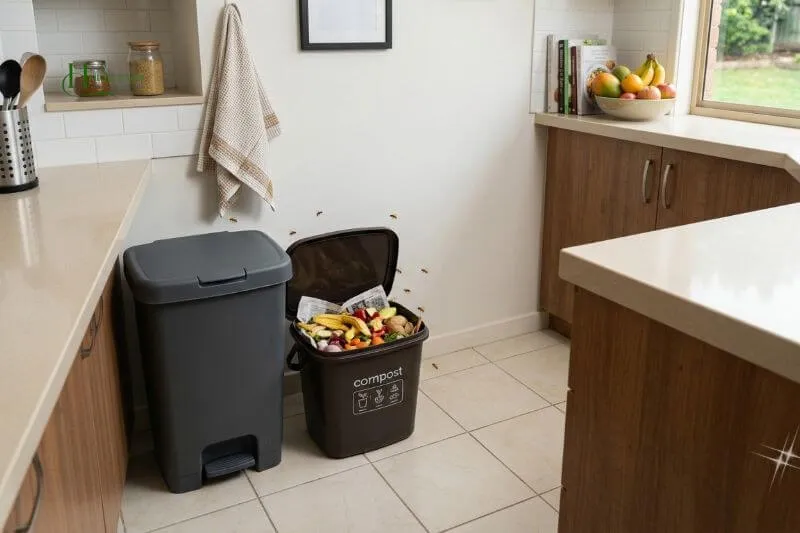
If you keep a small compost container inside your kitchen, it can be convenient but exposed food scraps can also attract fruit flies.
Fruit peels, vegetable scraps and other moist organic material can become especially noticeable during warm, humid weather.
Keep the Compost Container Covered
Choose a container with a securely fitting lid and avoid leaving food scraps exposed for long periods.
If possible, empty the indoor container regularly rather than allowing scraps to accumulate.
Balance Wet Food Scraps with Dry Material
If you’re composting at home, very wet food waste can create an environment that attracts unwanted insects.
Where appropriate for your composting method, cover fresh food scraps with suitable dry or “brown” material, such as dry leaves or approved paper-based compost material.
Follow the rules of your local composting system because accepted materials can vary.
Freeze Food Scraps Until Collection Day
If your local setup allows it, one practical option is to freeze food scraps temporarily and transfer them to the composting system on collection day.
This can be particularly useful if you don’t have an outdoor compost area and don’t want food scraps sitting inside your kitchen for several days.
Is It Normal to Have Flies in a Compost Bin?
A few flies may appear around exposed food scraps, especially when the compost is wet or uncovered. However, a large number of flies usually means the container needs better management.
Check whether:
- Food scraps are being left exposed.
- The container is too wet.
- The lid isn’t closing properly.
- The bin isn’t being emptied frequently enough.
- Food residue has spilt around the container.
Rather than trying to kill every fly individually, correct the conditions attracting them in the first place.
Can I Put Vinegar in My Compost Bin?
If you’re dealing with fruit flies, you may be tempted to try every kitchen remedy you have heard about—including vinegar.
For compost, though, vinegar shouldn’t be treated as a routine fruit-fly solution. It is acidic and doesn’t replace the basic steps that keep an indoor compost container manageable.
Instead, focus on:
- Keeping the compost container covered.
- Removing food scraps regularly.
- Covering fresh wet scraps with suitable dry compost material.
- Cleaning spills around the container.
- Keeping the container from becoming excessively wet.
- Following the composting rules for your particular system.
If your local composting guidance specifically permits vinegar in small quantities, follow that guidance rather than adding it simply to control flies.
What Should You Never Put in a Kitchen Compost Bin?
This depends on the composting system and local collection rules, so always check the instructions for your area.
As a general precaution, don’t put chemical cleaners, plastics, oils, or other non-compostable materials into a kitchen compost container. Meat, fish, dairy and cooked food may also be restricted by some composting systems.
The important point is that a compost bin is not a garbage bin. Adding unsuitable materials can create smells, pests and contamination problems.
Use Jaali Dar Parday and Mesh Screens to Keep Flies Out

Here’s one simple solution that makes particular sense for homes where kitchen windows and doors are frequently kept open:
Install properly fitted jaali (mesh) screens.
In warm weather, we naturally want fresh air moving through the kitchen. But an open window or door can also give small flying insects an easy route inside.
A good mesh screen won’t solve an infestation that’s already inside your kitchen, but it can help reduce new insects entering from outdoors.
Install Mesh on Kitchen Windows and Doors
Check the windows and doors around your kitchen and look for:
- Torn mesh
- Gaps around the edges
- Loose-fitting screens
- Open ventilation areas
- Doors that remain open for long periods
If the jaali has a tear, repairing it may be more useful than continuously trying different sprays and scents.
Properly fitted mesh screens can help reduce the number of flying insects entering through open windows and doors. University of Kentucky guidance recommends tight-fitting screens for helping prevent adult fruit flies from entering.
Where Should You Use Jaali?
Consider using fitted mesh screens on:
- Kitchen windows
- Back doors
- Balcony doors near the kitchen
- Ventilation openings
- Windows close to your fruit or food-preparation area
💡 Her Kitchen Guide Tip:
If your kitchen has one particular window that stays open most of the day, start there. You don’t necessarily need to screen every opening in the house to make a useful difference.
One Important Limitation
Don’t expect jaali to remove fruit flies that are already breeding inside your kitchen.
If flies are already coming from overripe fruit, a damp bin, compost container or drain, you still need to deal with that source.
Think of mesh as prevention, not the main treatment.
Can Reducing Kitchen Lights Help Fruit Flies Leave?
This is one of those simple tricks you may hear about when trying to get flying insects out of a room.
You can try reducing unnecessary indoor lighting and making a screened exit or doorway the brighter route. However, this should be treated as a supporting trick, not a guaranteed way to remove fruit flies.
How to Try This Simple Method
If you have several visible flies flying around:
- Turn off unnecessary kitchen lights.
- Keep food and fruit covered.
- Make one screened doorway or window the brighter exit area.
- Give the flies some time to move around.
- Close the opening after you’re finished.
- Use a fruit fly trap for any flies that remain indoors.
The idea is to make the exit area more noticeable, but lighting alone won’t solve the underlying infestation.
If the flies have a food or breeding source inside the kitchen, they’ll continue to return until that source is removed.
What About Yellow Lights?
You may also come across advice suggesting yellow bulbs are better for keeping flying insects away.
They may help reduce attraction for some flying insects in certain situations, but don’t rely on lighting as your primary fruit-fly control method.
For a kitchen, removing food sources, cleaning damp areas and using properly fitted mesh screens are much more practical measures.
💡Bottom line:
Use the light trick if you want to try it, but don’t skip the cleaning and prevention steps. A darker kitchen won’t fix a hidden breeding source.
How to Prevent Fruit Flies During Pakistan’s Hot and Humid Weather
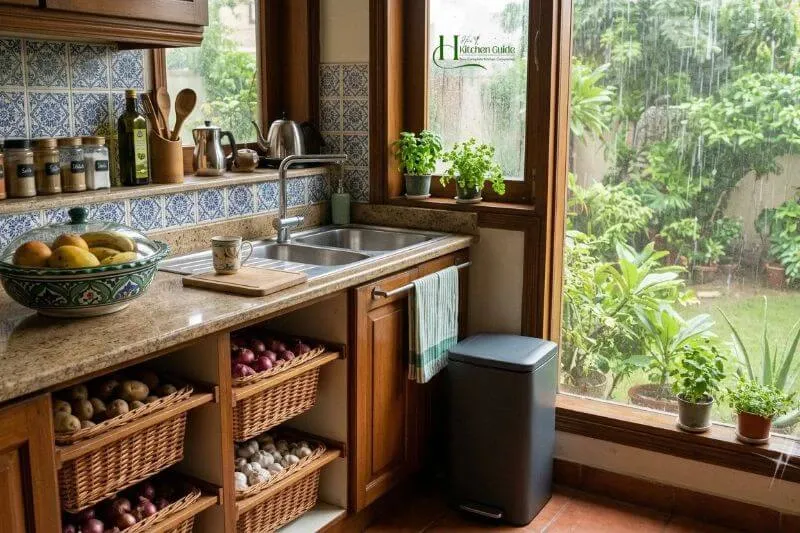
Getting rid of the flies you can see is only half the job. The real win is making your kitchen less inviting so you don’t find yourself fighting the same problem again next week.
This becomes especially important during Pakistan’s hot, humid and rainy weather, when damp surfaces, food scraps and ripe produce can remain moist for longer.
For additional information about locating and removing fruit fly breeding sources, see this fruit fly guidance from University of Maryland Extension.
Here are the habits I’d focus on first.
Keep Ripe Fruit Covered
Don’t leave cut or very ripe fruit sitting uncovered for hours, especially:
- Mangoes
- Bananas
- Melons
- Peaches
- Other soft or overripe fruit
If suitable, refrigerate ripe produce or keep it in a covered food container.
A pretty open fruit bowl may look lovely on the kitchen counter, but during humid weather it can also become an easy food source for fruit flies.
Don’t Leave Wet Food Waste Overnight
Fruit peels, vegetable scraps and other wet food waste can quickly become a problem if they’re left sitting in a warm kitchen.
If your kitchen waste is particularly wet, consider emptying it more frequently instead of waiting for the bin to become completely full.
Keep Your Sink Dry
After washing dishes or vegetables, don’t leave the sink constantly wet if you can avoid it.
Wipe away standing water and pay attention to:
- The sink strainer
- Around the drain
- The edges of the sink
- The area underneath the faucet
Also check for slow drainage or leaks, especially underneath the sink.
Dry Kitchen Cloths and Mops Properly
This is an easy one to overlook.
A damp dishcloth, sponge, mop or cleaning rag can keep moisture around the kitchen for much longer than necessary.
After cleaning, hang washable cloths where they can dry properly instead of leaving them in a wet heap beside the sink.
Clean Juice and Sharbat Spills Quickly
In many Pakistani homes, summer means plenty of cold drinks, juices and sharbat.
A tiny sticky spill may not look like a big deal, but leaving sugary residue on a counter, cabinet handle or floor can make the kitchen more attractive to insects.
If something spills, wipe it properly rather than just giving it a quick swipe.
Check Potatoes, Onions and Tomatoes
Don’t only look at the fruit bowl.
Stored produce can also become an overlooked source of insects. Check potatoes, onions, tomatoes and other produce kept in baskets, cabinets or pantry corners.
Remove anything that is:
- Rotten
- Leaking
- Overripe
- Moldy
- Giving off an unusual smell
And clean the area where it was stored before putting fresh produce back.
A well organized pantry also makes it easier to notice forgotten produce and leaking packages. These pantry organization ideas for small kitchens can help you keep ingredients visible and easier to check.
Keep Sugar, Jaggery and Other Food Items Covered
Sticky or sweet ingredients should be stored in clean, tightly closed containers.
This is especially useful for ingredients such as sugar, jaggery, syrups and other foods that may leave residue around their containers.
Keep Food Covered When You’re Not Cooking
If you’re preparing a meal and need to step away for a while, cover ingredients and cooked food instead of leaving them exposed.
This is a small habit, but it becomes even more useful when your kitchen already has a fruit-fly problem.
Why Is My Fruit Fly Trap Not Working?
You’ve cleaned the counter, made the vinegar trap and are still seeing flies.
Frustrating? Absolutely.
But it doesn’t necessarily mean the trap is useless. More often, something else is attracting the flies.
Check These Hidden Sources
Walk around your kitchen and inspect:
- Fruit bowls
- Kitchen garbage
- Indoor compost containers
- Sink drains
- Garbage disposal
- Recycling containers
- Sticky bottles and cans
- Under refrigerators
- Under cooking appliances
- Potatoes and onions
- Damp cleaning cloths
- Houseplants and moist potting soil
Also make sure you’re actually dealing with fruit flies. Drain flies and fungus gnats require a different approach, so identifying the insect matters.
The Trap May Simply Be in the Wrong Place
If flies are gathering around the sink but your trap is sitting beside the refrigerator, move it closer to the activity.
Likewise, if the main attraction is the compost bin, placing the trap across the kitchen may not give you the result you expect.
Don’t Expect Overnight Results
A trap can help catch adult flies, but it doesn’t automatically remove eggs or eliminate every possible breeding source.
If you keep seeing new flies, continue checking the kitchen for several days and remove anything that could be providing food or moisture.
The goal isn’t simply to catch flies. It’s to break the cycle that keeps bringing them back.
Should You Use a Store-Bought Fruit Fly Trap or Spray?
DIY traps can be useful for a small problem, but sometimes you may prefer a ready-made product especially when you’re dealing with flies repeatedly appearing around the kitchen.
The important thing is to choose a product according to the type of insect and the manufacturer’s instructions, rather than simply buying the strongest-looking spray.
Commercial Fruit Fly Traps
You may find several types of products, including:
- Ready-to-use liquid fruit fly traps
- Disposable fruit fly traps
- Sticky traps
- Plug-in insect traps
- UV light traps
For a fruit-fly problem, a product specifically labelled for fruit flies is generally a better starting point than using a general insecticide without identifying the pest.
If you’re using a trap, place it close to the area where you’ve noticed activity while keeping exposed food covered.
What About Fruit Fly Sprays?
Sprays can kill visible insects, but they don’t necessarily solve the reason the flies appeared in the first place.
For example, spraying flies around your fruit bowl won’t help much if an overripe piece of fruit is still sitting underneath the bowl or if the actual source is the kitchen drain or garbage bin.
If you decide to use an insecticide:
- Read the product label carefully.
- Follow the recommended application instructions.
- Keep children and pets away from treated areas as directed.
- Remove or cover exposed food.
- Don’t spray directly onto food, dishes or food-preparation surfaces unless the product label specifically allows it.
- Wash food-contact surfaces as instructed before preparing food again.
Never mix different cleaning or pest-control chemicals.
For general advice about using household pest control products safely, see the EPA pesticide safety guidance.
💡Kitchen safety first:
In a food-preparation area, removing the source and using appropriate traps should come before reaching for an insecticide whenever practical.
How Long Does It Take to Get Rid of Fruit Flies?
This is one of the most frustrating parts of a fruit-fly problem.
You may clean your kitchen thoroughly and still notice a few flies afterwards. That doesn’t necessarily mean your cleaning failed.
Visible adult flies can decrease relatively quickly after you remove their food sources and use traps, but a persistent infestation can take longer because hidden eggs or larvae may remain in a suitable food source.
What You Can Expect
For a small problem:
- Remove ripe or spoiled produce immediately.
- Empty and clean the garbage.
- Check the compost container.
- Clean the sink and drain area.
- Cover exposed food.
- Set up a suitable trap.
- Continue monitoring for several days.
If new flies continue appearing, don’t simply keep adding more traps.
Go back through the kitchen and look for a hidden breeding or food source.
When Should You Be Concerned?
Consider getting additional help if:
- Flies continue appearing despite several days of thorough cleaning.
- You notice flies coming from plumbing or wall areas.
- Your kitchen drain smells persistently bad.
- The drain is slow or blocked.
- There is a leak or damp area under the sink.
- The insects don’t look like typical fruit flies.
- The infestation is unusually large.
Sometimes what looks like a simple fruit-fly problem can actually involve drain flies, fungus gnats, plumbing issues or another pest, so persistent problems deserve a closer look.
Common Mistakes That Keep Fruit Flies Coming Back
Sometimes the problem isn’t that you’re not cleaning enough. It’s that one small source keeps getting overlooked.
Here are some of the most common mistakes to avoid:
Only Killing the Flies You Can See
Swatting or spraying visible flies may give you temporary relief, but it doesn’t remove the source.
Leaving Fruit Uncovered
A single overripe banana, mango or other soft fruit can keep attracting flies even when the rest of your kitchen is spotless.
Forgetting the Compost Bin
If you have an indoor compost container, don’t forget to check it. Wet, exposed food scraps can attract small flies.
Cleaning the Counter but Ignoring the Drain
A sparkling countertop doesn’t help much if food residue is building up somewhere inside or around the sink drain.
Leaving Wet Waste Overnight
Wet food scraps sitting in a warm kitchen can become an easy attraction for insects.
Putting the Trap Too Far Away
Place the trap near the area of activity instead of hiding it in an unrelated corner of the kitchen.
Assuming Every Tiny Fly Is a Fruit Fly
Fruit flies aren’t the only small flying insects you may see indoors. Drain flies and fungus gnats can look similar at first glance but need different source-control strategies.
Relying Only on Scents or Lighting
Scents, lights and other tricks may be useful as supporting measures, but they shouldn’t replace sanitation, source removal and prevention.
Using Chemicals Near Food
This is one shortcut that isn’t worth taking. Always prioritize food safety and follow the label whenever a pest-control product is necessary.
The simplest approach is usually the most effective: find what is attracting them, remove it, clean the area and then prevent the next group from getting comfortable in your kitchen.
Quick Monsoon Fruit Fly Checklist
If fruit flies tend to show up every summer or during the rainy season, you don’t have to wait until you see a swarm before doing something about them.
A few small habits can make your kitchen much less inviting to them.
Your 5-Minute Kitchen Check
- Remove overripe or spoiled fruit.
- Cover or refrigerate ripe produce where appropriate.
- Empty wet kitchen waste.
- Check and clean the compost container.
- Rinse sticky bottles, cans and food packaging before recycling.
- Clean the sink strainer.
- Check around the kitchen drain.
- Wipe sticky juice, sharbat or food spills.
- Dry the sink and surrounding counter.
- Set up a fruit fly trap if you are already seeing flies.
- Keep exposed food covered.
- Dry damp kitchen cloths and mops.
- Check potatoes, onions and tomatoes for spoilage.
- Check that your kitchen jaali screens have no holes or gaps.
- Keep doors and windows screened when they’re open.
💡 Small habit that helps:
During hot and humid weather, I would make the fruit bowl, sink and garbage bin part of a quick evening kitchen check. It takes only a few minutes and can help you catch the problem before it becomes annoying.
When Should You Call for Help?
Most small fruit-fly problems can be managed by removing food sources, cleaning potential breeding areas and using an appropriate trap.
But if you’ve done all of that and the flies keep coming back, it’s worth looking beyond the obvious.
You may need professional pest-control or plumbing help if:
- Flies continue appearing after several days of thorough cleaning.
- You notice insects coming from a drain, wall or plumbing area.
- There is a persistent drain smell.
- Your sink or drain is slow.
- You find a leak or consistently damp area under the sink.
- You aren’t sure whether the insects are actually fruit flies.
- The infestation is severe.
- You have children or pets and are unsure about using a pesticide safely.
A professional can help identify whether you’re dealing with fruit flies, drain flies, fungus gnats or another pest and locate a source that isn’t obvious during normal kitchen cleaning.
The Bottom Line: Get Rid of the Source, Not Just the Flies
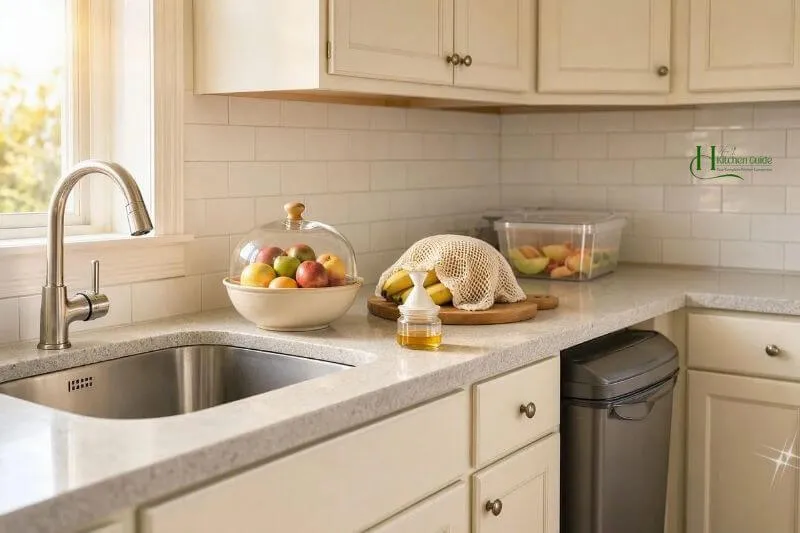
Seeing fruit flies flying around your kitchen can make you want to grab a spray and deal with them immediately.
But the better long-term approach is to ask a different question:
“What is attracting them here?”
Check the fruit bowl. Empty the wet garbage. Inspect the compost container. Clean the sink and drain. Look at stored potatoes, onions and tomatoes. Wipe sticky spills. Keep food covered and use properly fitted jaali screens on windows and doors.
And if you’re dealing with the problem during Pakistan’s hot, humid or rainy weather, pay extra attention to moisture and wet food waste.
A simple vinegar trap can help catch adult flies, but source removal is what makes the real difference.
Once your kitchen is clean, dry and less accessible to flying insects, keeping it fruit-fly-free becomes much easier.
💡 One last reminder:
You don’t need a complicated collection of sprays and expensive gadgets to start. Begin with the basics, be consistent for several days, and investigate any area where the flies keep returning.
Frequently Asked Questions
Q: How do I get rid of fruit flies in my kitchen fast?
Ans: Remove overripe fruit, empty wet garbage, clean sticky food residue, check the sink and drain, and cover exposed food. You can also place an apple cider vinegar and dish-soap trap near the area where flies are most active. These steps can reduce visible flies quickly, but persistent infestations may take several days to control.
Q: How do I get rid of fruit flies in my kitchen sink?
Ans: Start by removing food particles from the strainer and scrubbing around the drain opening. Clean accessible areas where organic residue can collect and keep the sink dry afterward. If flies continue appearing around the sink, inspect the drain more closely and consider whether there could be a persistent buildup, leak, or drainage problem.
Q: How do I get rid of fruit flies in my kitchen drain?
Ana: Clean the drain opening and strainer thoroughly, then remove visible organic buildup with an appropriate drain brush. Keep the area as dry as practical and check for slow drainage or leaks. Avoid mixing cleaning products, especially bleach with vinegar or ammonia. If flies repeatedly emerge from the drain despite cleaning, professional plumbing or pest-control advice may be needed.
Q: How do I get rid of fruit flies in my kitchen bin?
Ans: Empty the bin frequently, especially when it contains wet food waste. Wash the inside and lid, remove sticky residue, and allow the bin to dry completely before adding a fresh liner. Keep the lid closed and clean the floor underneath the bin as well. During hot or humid weather, more frequent emptying can help prevent the problem from returning.
Q: Can I put vinegar in my compost bin?
Ans: Don’t use vinegar as a routine fruit-fly treatment for compost unless your specific composting guidance permits it. Vinegar doesn’t replace proper compost management. Keeping food scraps covered, controlling excess moisture, emptying an indoor container regularly and using appropriate dry material are more practical ways to manage an indoor compost bin.
Q: How do I get rid of fruit flies in an indoor compost bin?
Ans: Keep the compost container covered and empty it regularly. Avoid leaving fresh fruit and vegetable scraps exposed, and use suitable dry or brown compost material to cover wet scraps where appropriate. You can also freeze food scraps temporarily if your composting system allows it. Always follow the rules for your local composting service or setup.
Q: What can I put in my garbage can to keep flies away?
Ans: Rather than putting chemicals or pesticides inside a household food-waste bin, focus on keeping it clean, dry and covered. Empty it frequently, wash away food residue and use a properly fitted liner. There isn’t a single scent or household ingredient that reliably replaces good waste management.
Q: What smell do fruit flies hate the most?
Ans: There isn’t one smell that can reliably eliminate a fruit-fly infestation. Scents may sometimes be used as a supporting measure, but they shouldn’t replace removing ripe fruit, food residue, wet waste and other potential sources. If you’re dealing with fruit flies, source removal and appropriate traps are more dependable approaches.
Q: Do drain flies eventually go away?
Ans: They may decrease when their breeding source is removed, but simply waiting for them to disappear isn’t the best approach. Drain flies can persist when organic buildup and moisture remain inside or around a drain. Clean the affected area, address drainage problems and look for leaks or other damp sources if the flies keep returning.
Q: What kills fruit flies in the garbage disposal?
Ans: Start by removing food residue and cleaning the accessible parts of the garbage disposal according to the manufacturer’s instructions. The aim is to eliminate the organic material that can attract flies rather than simply killing the adult insects. If the problem persists around the disposal or drain, investigate for hidden buildup or a plumbing issue.
Q: Is it normal to have flies in my compost bin?
Ans: Keep the lid closed, empty the indoor container regularly and avoid leaving wet food scraps exposed. Where appropriate for your composting method, cover fresh scraps with suitable dry or brown material. Clean spills around the container and avoid allowing excess moisture to build up. Local composting rules should always take priority.
Q: Can reducing kitchen lights help flies leave?
Ans: It may sometimes help guide visible flying insects toward a brighter exit, but it isn’t a guaranteed fruit-fly treatment. You can turn off unnecessary kitchen lights while keeping a screened doorway or window brighter, but continue using traps and removing food and moisture sources. Lighting should be considered a supporting trick, not the main solution.
Q: Do jaali(mesh) screens stop fruit flies from entering?
Ans: Properly fitted mesh screens can help reduce insects entering through open windows and doors, but they won’t eliminate flies already inside your kitchen. Repair torn mesh and close gaps around the edges. For an existing infestation, continue checking fruit, garbage, compost, drains and other potential sources.
Q: How do I prevent fruit flies during Pakistan’s rainy season?
Ans: Keep ripe fruit covered or refrigerated where appropriate, empty wet waste frequently, clean indoor compost containers, keep sinks and counters dry, and wipe sugary spills quickly. Check stored produce such as potatoes, onions and tomatoes, and use properly fitted jaali screens on kitchen windows and doors. These simple habits are especially useful during warm, humid weather.
📌 Save this post on Pinterest so you can easily find it whenever you need.
📘 Follow Her Kitchen Guide on Facebook for practical kitchen tips, easy recipes, and simple organization ideas shared.
📷 Follow Her Kitchen Guide on Instagram for quick kitchen inspiration, behind-the-scenes tips, and everyday organization ideas.
You May Also Like
👉 15 Natural Kitchen Cleaning Hacks That Save Time, Money, and Effort
👉Best Pantry Organization Ideas for Small Kitchens
Explore More Kitchen Guides
Looking for more practical kitchen tips, appliance buying guides, and easy recipes? Browse our latest articles and discover more helpful kitchen guides.